City Mismanagement

Chicago, IL

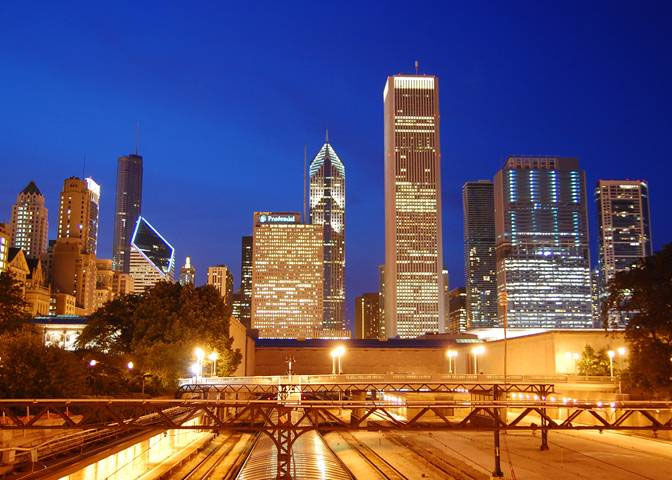
In 1950, Chicago’s population peaked at about 3.6 million people. Since then, the city has lost nearly 1 million residents. Corruption, government bureaucracy, high taxes and a lack of a significant wealth-generating industry have all been cited as factors.

The city’s fastest growing industry is Business Products & Services according to a study conducted by city government.  Seaton Companies, a headhunter firm is their largest fast growing company.  While head hunting companies do create jobs, the numbers would be small compared to the more likely industries like finance and manufacturing.

P1000968

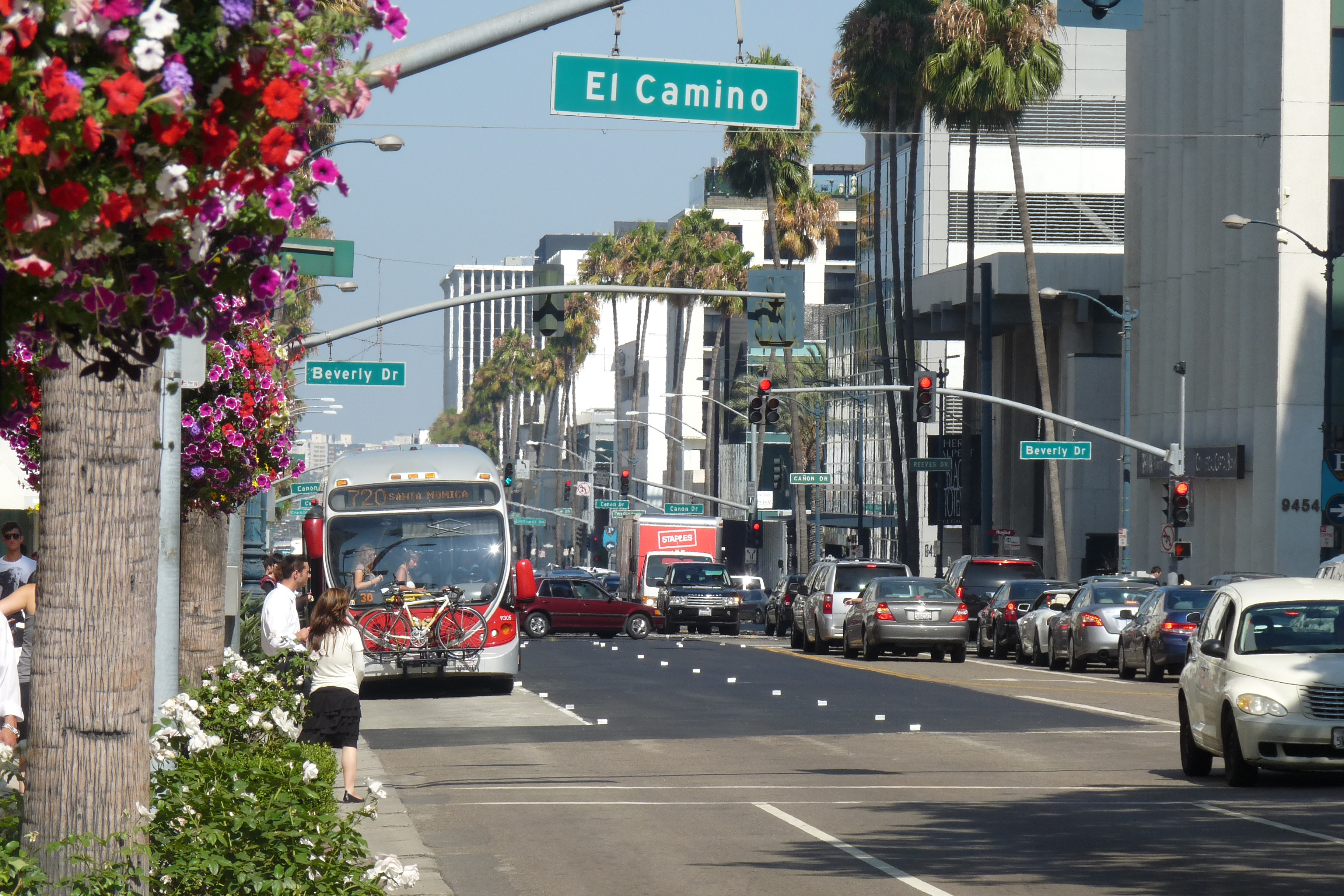
 On Wilshire Blvd. Beverly Hills – Panasonic DMC FZ28, f/5.6, 1/500 sec., ISO 100, hand held 

Los   Angeles seems to be taking a page from the Chicago playbook.  Added taxes, added fines, and potential lost jobs are the consequence of surrendering to environmentalists.  The latest decision by the Los Angeles city council is to ban plastic shopping bags at all stores and require stores to charge 10¢ for every paper shopping bag.   

The Los Angeles County unemployment rate is 9.3%.  To drive that number even higher the city council should consider new taxes at restaurants, hotels, and amusement parks.  The reason would be we need more money to clean the streets or hire more police.

Of course this makes no sense.  But who said City Hall is sensible?

There is the issue.  The city councils of Chicago, Los Angeles, and many other cities are responding to pressure groups rather than doing the right thing.  Of course they say they are doing the right thing.  With high unemployment in Los Angeles and a falling population in Chicago, are they doing the right things?

A Growing Welfare Class in the United States

I hear the constant drum beat that 47 million Americans pay no taxes.  That those people are on the dole.  All those people don’t really want to work.  The argument goes they are happy sitting in their homes doing nothing.

Is this all really true? If so, how did this happen?

A Google search [percentage of Americans paying income taxes] confirms that about one half of all Americans do not pay income taxes.  The sites How Stuff Works, Fox News, The Washington Post, Reuters, and others all offer their take on why this is fact and some offer arguments about changing the taxing system.  All the postings do affirm that everyone pays Social Security and Medicare taxes.

From How Stuff Works: So who are the 49 percent of Americans who don’t pay income taxes? The vast majority are the lowest income households, the elderly and young working families with children.

The reason this situation exists and is becoming worse was clearly defined in a Market Watch article posted on April 24, 2012.

Manufacturing employment as a fraction of total employment has been declining for the past half century in the United States and the great majority of other developed countries. A 1968 book about developments in the American economy by Victor Fuchs was already entitled “The Service Economy.”

Although the absolute number of jobs in American manufacturing was rather constant at about 17 million from 1969 to 2002, manufacturing’s share of jobs continued to decline from about 28% in 1962 to only 9% in 2011.

From CNN: A very large portion of U.S. apparel imports comes from Bangladesh. Many companies have been shifting orders there, because labor costs in the country are so low. Bangladesh is on track to surpass China within the next seven years as the largest apparel manufacturer in the world.

It is already the third biggest exporter of apparel to the U.S., behind China and Vietnam. The value of clothing imported from Bangladesh into the U.S. has quadrupled over the last decade to $4.5 billion annually, according to the apparel group.

Go into any store in the United States and you will find most products have been made in another country.  Talking to a lady at Trader Joe’s just yesterday and she complained that the fresh produce is primarily from Mexico.

Back in 2007 the total unemployed that included part time workers and those who have given up searching for a job was below 8.5% of the likely working population.  Today that number is 13.9%.  That is the BLS number referred to as U6 on the monthly reports.  It’s an improvement from the maximum number of 17.1% reached in October 2009.

I can’t prove it but I believe no one wants to live poorly when they see the things they can have with an income.  Unfortunately the poor are also the least educated.  That condition of poor education is partially lack of opportunity and partially lack of capability.  Not all of us are capable of working in Silicon Valley or performing surgery at the Mayo Clinic.  Those less technical jobs have been sent to the places where labor costs less.  Every company has the right to lower their costs.  Middle class and blue collar America has paid the price for those off shored jobs.

So the wealthy of America (they pay most of the taxes) have concluded that welfare is a cheap price to pay to keep peace in the United States.  It’s the thing the royalty of France and Russia did not understand.  We all know how that worked out.  There is no royalty in the United States but there is a wealthy class that is the equivalent of royalty.  Once again the U.S. leads the list with 442 billionaires the most of any nation in the world says Forbes magazine.  The New York Daily News reports that there are 9 million members of the millionaires club in the U.S.

My prediction is that the welfare class will continue to exist in the United States and is likely to grow throughout the 21st century. This is not negative. It is reality.

Which minority will be next?

Infamously ill-tempered Fox News co-host and former Democratic strategist, Bob Beckel, suggested this past Monday that the U.S. stop accepting foreign Muslim students until the ones already here have been thoroughly vetted.

Bob Beckel “The hatred for the United   States runs deep,” Beckel said during a broader discussion on the Boston Bombings.  Perhaps we should block entry of all Muslims into this country until those already here, both permanent residents and visiting Muslims, have been thoroughly vetted.

Look, America is under siege.  Radical Muslims have sworn to attack and destroy the United States.  Unless Muslims can prove that they are not part of a radical group we must assume that they are.  I am merely following Beckel’s reasoning.

The United States locked up 120,000 Japanese Americans during World War II.  There were no trials.  The decision was based upon the fear that any one of those people could be working for their native land.

Apparently we have not changed.  Run for the exits!  Fear has overtaken logic and reason.  The rights defined in the constitution are about to be ignored.

Which minority will be next?

Equality is something for Everyone!

Some of the people in my family are devoutly religious.  None are in my immediate family.  I am quite certain that they believe marriage is between a man and a woman.  They believe it cannot be any other way.  Homosexuality is, in their view, something to be hidden and something to be ashamed of.  It must have been VERY difficult for Senator Rob Portman, who had taken a strong stand against gay marriage to learn that his 21 year old son is gay.

I personally find sexual relations between two people of the same sex to be revolting.  Especially sex between two men.  There was nothing funny about “I Love You Phillip Morris” starring Jim Carrey.  To me it was horrifying.

Despite my feelings, I recognize that there are people in this world who are attracted to others of the same sex.  They have the right to live their lives as happily as does the rest of society.  Homosexual marriages will not impact my marriage in any way.  The religious may believe that homosexual marriage will demean the basic principles of marriage.  Those that have that belief probably also find all deviations from orthodox religion as unacceptable behavior too.

No one makes you associate with those you find an anathema to your views or beliefs.  You are not required to associate with people of another religion, race, political party, etc. that you consider unacceptable.

Modern Family” really is a profile on the early 21st century as “The Jeffersons” were in the last part of the 20th century.

I have no idea how the Supreme Court will rule on California’s Proposition 8 or DOMA.  I would recommend the justices re-read the American Declaration of Independence and the preamble to the Constitution.

Equality is something for Everyone!  No law should limit that right!

The 1% aren’t like the rest of us

This Op-Ed from the Los Angeles Times is really worth the read.   I admit to being part of the 47% that Mitt Romney mocked.  The findings of this survey confirm what I always knew.
Monopoly Game Box

The ultra-rich share few of the priorities of most Americans, but their access to policymakers is greater, a study finds.

By Benjamin I. Page and Larry M. Bartels

March 22, 2013

Over the last two years, President Obama and Congress have put the country on track to reduce projected federal budget deficits by nearly $4 trillion. Yet when that process began, in early 2011, only about 12% of Americans in Gallup polls cited federal debt as the nation’s most important problem. Two to three times as many cited unemployment and jobs as the biggest challenge facing the country.

So why did policymakers focus so intently on the deficit issue? One reason may be that the small minority that saw the deficit as the nation’s priority had more clout than the majority that didn’t.

We recently conducted a survey of top wealth-holders (with an average net worth of $14 million) in the Chicago area, one of the first studies to systematically examine the political attitudes of wealthy Americans. Our research found that the biggest concern of this top 1% of wealth-holders was curbing budget deficits and government spending. When surveyed, they ranked those things as priorities three times as often as they did unemployment — and far more often than any other issue.

If the concerns of the wealthy carry special weight in government — as an increasing body of social scientific evidence suggests — such extreme differences between their views and those of other Americans could significantly skew policy away from what a majority of the country would prefer. Our Survey of Economically Successful Americans was an attempt to begin to shed light on both the viewpoints and the political reach of the very wealthy.

While we had no way to measure directly the political influence of those surveyed, they did report themselves to be highly active politically.

Two-thirds of the respondents had contributed money (averaging $4,633) in the most recent presidential election, and fully one-fifth of them “bundled” contributions from others. About half recently initiated contact with a U.S. senator or representative, and nearly half (44%) of those contacts concerned matters of relatively narrow economic self-interest rather than broader national concerns. This kind of access to elected officials suggests an outsized influence in Washington.

On policy, it wasn’t just their ranking of budget deficits as the biggest concern that put wealthy respondents out of step with other Americans. They were also much less likely to favor raising taxes on high-income people, instead advocating that entitlement programs like Social Security and healthcare be cut to balance the budget. Large majorities of ordinary Americans oppose any substantial cuts to those programs.

While the wealthy favored more government spending on infrastructure, scientific research and aid to education, they leaned toward cutting nearly everything else. Even with education, they opposed things that most Americans favor, including spending to ensure that all children have access to good-quality public schools, expanding government programs to ensure that everyone who wants to go to college can do so, and investing more in worker retraining and education.

The wealthy opposed — while most Americans favor — instituting a system of national health insurance, raising the minimum wage to above poverty levels, increasing the Earned Income Tax Credit and providing a “decent standard of living” for the unemployed. They were also against the federal government helping with or providing jobs for those who cannot find private employment.

Unlike most Americans, wealthy respondents opposed increased regulation of large corporations and raising the “cap” that exempts income above $113,700 from the FICA payroll tax. And unlike most Americans, they oppose relying heavily on corporate taxes to raise revenue and oppose taxing the rich to redistribute wealth.

Some of the differences between the political views of the wealthy and other Americans may be explained by differences in the two groups’ economic experiences and self-interest. The wealthy are likely to have better information about the costs of government programs (for which they pay a lot of taxes) than about the benefits of those programs. They don’t usually have to rely on Social Security, for example, let alone food stamps or unemployment insurance.

Another possibility is that the wealthy — who tend to be highly educated, well informed and committed to charitable giving — seek the common good as they see it, and in fact know better than average Americans what sorts of policies would benefit us all. On the issue of federal deficits, for example, the public has come to see government debt as an increasingly important problem over the last two years, reducing the gulf between their views and those of the wealthy. Is that because the wealthy were ahead of the curve, or because their concern helped stimulate a steady drumbeat of deficit alarmism in the media and in Washington?

Our pilot study included a relatively small number of wealthy citizens, and they were all from a single metropolitan area. A larger-scale national study is needed to pin down more precisely the views of wealthy Americans about public policy. We need to understand how they formed the preferences they have, and how wealthy people from different regions, industries, and social backgrounds differ in their political views and behavior. We also need to understand more about their political clout.

Our initial results suggest the wealthy have very different ideas than other Americans on a variety of policy issues. If their influence is far greater than that of ordinary people, what does that mean for American democracy?

Benjamin I. Page is a political science professor at Northwestern University and co-author of “Class War? What Americans Really Think About Economic Inequality.” Larry M. Bartels is a political science professor at Vanderbilt University and author of “Unequal Democracy: The Political Economy of the New Gilded Age.”

// Copyright © 2013, Los Angeles Times
Obama the Naive

President Barack Obama “delivered an impassioned appeal Thursday for Israel to recognize that compromise will be necessary” to achieve lasting security and reverse international isolation.  This was reported in an AP article.

A short review of history tells us that Israel cannot provide any more compromises than have already been given.

Hamas rocket in gaza

Tens of thousands of Hamas supporters gathered in Gaza City near a large replica of an M-75, a Hamas rocket, that bore the words “Made in Gaza.”

  • Hamas is the group that functions as the Gaza      government.  Hamas does not  recognize the right of Israel to exist.  Without that recognition      there can be no legitimate negotiations.   Khaled Meshal, the political leader of Hamas gave a defiant speech      this past December vowing to build a Palestinian state on the land of Israel.  In that speech he vowed to remove every      inch of Israel and that that there is no legitimacy for Israel.”
  • Israel  did withdraw from the Gaza  strip leaving behind many buildings.   They were all destroyed by the Palestinians.  Hamas now uses Gaza as a base to  shoot rockets into Israel  and in fact was shooting rockets as President Obama spoke to Israelis  today.

Precisely what compromise would Mr. Obama propose?

David Bancroft

Is America Finally Understanding the World?

The answer to the question is “maybe not.”

Almost 4,500 American solders lost their lives in Iraq.  Thousands more were seriously injured.  Was it worth the harm?  I do not see sufficient benefits to justify the investment.

President George W. Bush really believed that the invasion of Iraq and Afghanistan was the right thing to do.

 You could argue that the information about WMD was faulty and that should have been enough to deter the invasion of Iraq. We really do not know what was in Mr. Bush’s mind nor what he was really told.

The invasion of Afghanistan was easier to justify.  The Taliban refused to extradite al-Qaeda leaders to the United   States.  al-Qaeda was the group that carried out the World Trade Center attack.

Mr. Bush argued that part of our mission was to spread democracy to Islamic nations that had lived under tyranny for hundreds of years.  The idea of spreading democracy is a wonderful theory that looks good on paper.  The problem is that most of the people in those countries do not understand the ideas of Western Democracy.  Those that do, do not accept the basic premises of western freedom and democracy.  It’s those words in the American Declaration of Independence that best express the idea of our system of society and government.  Let’s be honest, it took America 89 years to actually implement our own ideals.  That’s the time from the American Declaration of Independence to the end of the American Civil War.

So how can we expect Iraq, Afghanistan, or other Middle Eastern Islamic nations to become Western democracies in just a year or two?  We Can’t!

Thus the United States needs to be concerned with its own survival in a world where many of the players have alternate ideas of how government and society should function.  I believe that President Obama has not yet fully understood this reality.  Why?  1) Our lack of preparation for an attack at Benghazi.  2) The mild response to North Korea’s stated intention to shoot a nuclear weaponized rocket at the United States.  3) The lack of progress in talks with Iran.

North Korea and Iran have stated repeatedly that they consider the United States their enemy.  They have stated their hatred on numerous occasions.  North Korea has stated it is preparing a nuclear armed missile that will target the U.S.A.   Iran had states that their first target is Israel followed by the United States.

We should be concerned and we should be prepared.  Neither North Korea nor Iran has participated in real talks to end the ongoing diplomatic conflicts.  There is nothing that has been reported that indicates that there will be a reduction in the disagreements we have with these two countries.

Unless a new approach to the two America haters is developed I predict there will be a war with both of them.  I hope President Obama has made adequate preparations.

We Are Too Big to Fail!

The Senate passed the $700 billion bank bailout bill on October 3 2008. The guts of the bill was the same as the three-page document submitted on September 21 2008, by Treasury Secretary Henry Paulson. Paulson had asked Congress to approve a $700 billion bailout to buy mortgage-backed securities that were in danger of defaulting. By doing so, Paulson wanted to take these debts off the books of the banks, hedge funds and pension funds that held them. The goal was to instill confidence in the functioning of the global banking system, which had narrowly avoided collapse.

Then came the annual bank stress tests.  The official name is Comprehensive Capital Analysis and Review, or CCAR.  The results of these tests would be to identify those banks and associated companies that were adequately capitalized. Those not having sufficient funds would be required to take action to resolve the issue.  The test is required for all banking institutions with $50 billion in total capital assets.

No banks were split apart and nothing was done to confront the fact that the four largest banking organizations overwhelmingly impact the entire nation.

Largest banks and thrifts in US by total assets

Total                 Total

Company                         City, State                 assets            deposits

JPMorgan Chase & Co.        New York, NY            2,250.8          1,127.8

Bank of America Corp.        Charlotte, NC             2,129.0           1,033.0

Citigroup Inc.                      New York, NY          1,873.9              865.9

Wells Fargo & Co.               San Francisco, CA      1,313.9             920.1

If any of these banks failed the United   States would step in to protect their well being.

Federal Reserve press release dated March 14, 2013.  “The Federal Reserve on Thursday announced it has approved the capital plans of 14 financial institutions in the Comprehensive Capital Analysis and Review (CCAR). Two other institutions received conditional approval, while the Federal Reserve objected to the plans of two firms.”

As to breaking apart the behemoths, not a word.

Democracy in Decline

16.1% of registered voters in Los   Angeles actually participated in yesterday’s city election.  It is a sad commentary on the belief that democracy works.  The message from the voters is that whoever they vote for the results will not change anything in city management.  We were all taught that elections mattered.  Apparently we have learned it just isn’t so.  Why vote if the outcome makes no difference?

This may not signal the end of democracy in the next few years.  However when I watch the Congress not doing its job it reinforces my suspicion that even at the highest levels of our society democracy is stumbling.

Those of you in other nations reading about the United   States and believing that we have the answers to making government work should consider our current performance.  Think twice or perhaps three or four times before joining this madness.