This is a very funny and entertaining letter to Donald Trump. It was printed in the Los Angeles Times on January 19, 2017.
By Ariel Dorfman
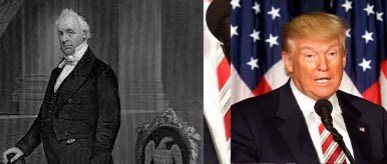
Sir: How long have I waited for your advent, prayed for someone like you to come along? All these years, since my death in 1868, I have watched each election cycle, hoping that finally my savior would appear, a man — heaven forbid it should be a woman! — who would rescue me from my status as the worst president in the annals of the United States.
Limited as your knowledge of our past may be, surely you are aware that I have been blamed for the secession of the Southern states in 1861, just as my term was ending. Unfairly faulted for the Civil War that ensued, I am now relieved to know that the presidency will soon be in the hands of someone who will, I am certain, go down in history as a leader who most bitterly divided the nation and wreaked havoc with the foundations of our democracy.
I am excited, indeed, about your chances of outshining me. If you persist in your campaign to drill, extract and pollute, if you enable the climate deniers and help to overheat our spacious skies, you will have led us, not to the brink of a conflagration that killed a mere million, but to a more substantial achievement of worldwide significance: taking the whole of humanity to the brink of extinction. That is a record that will considerably exceed my own lapses and make me seem a paragon of wisdom to future citizens (at least, those who survive).
As to the peoples’ daily lives, you are likely to far surpass the harm I have wrought there as well. Many families cursed my name as they received news of their maimed or dead kin, but many more will curse yours when their well-being deteriorates as you assault the country’s healthcare system.
Regarding corruption, I am also hopeful you will outstrip me. My offenses (accused of bribery, extortion and abuse of power by a congressional committee) will be deemed petty compared to those that loom for you, guaranteeing an administration rife, at all levels, with sleaze and conflicts of interest. But do not tarry over your manifest financial or ethical dilemmas. I managed to avoid impeachment and so will you, given your proven ability to convince your supporters that facts do not matter. Would that such talents had been bestowed upon me, and oh that television and social media had been invented in my day. I could have blamed Mexico for our Civil War.
Could you address two other matters? The first is abortion. It was during my presidency, in 1859, that the American Medical Assn. urged the criminalization of women who terminated their pregnancies, and you have the chance to revert our laws and customs to that pristine moment when the gentle sex recognized that their bodies belonged to their menfolk. And then Cuba. I tried in vain to buy that island from Spain and then favored invading it. You can complete my dream. Extend the reach of our empire into the Caribbean and beyond, intervene vigorously in the affairs of enemy and allied nations. Pay special attention to China, where I made the mistake of being only marginally involved in the Second Opium War. I am sure you will do better when you engage the Chinese in the First Asian Trade War.
I am not alone in urging you to stubbornly follow your instincts. Other deceased presidents also entertain high expectations for your reign. Richard Nixon wishes that your slurs and insults would make people forget his own foul language, and he eagerly anticipates manifold Trumpgates that will make Watergate seem small potatoes. Warren G. Harding is certain that your outrages will go far beyond the Teapot Dome scandal, which fraudulently favored the oil companies. And Herbert Hoover, reviled for ignoring the oncoming Great Depression, is confident you will be even more obtuse, and when you precipitate a worse economic catastrophe his actions will thus appear less disastrous. He expects you will also best him in union-busting and the massive deportation of immigrants.
Presidents who occupy the top tier of favorite leaders, including several Founding Fathers, have reproached me for appealing to what they call the worst angels of your nature. They are preparing a collective message counseling moderation and praying that you are not further deranged by the power of your high office.
Franklin Roosevelt believes that informing you that he regrets the internment of Americans of Japanese origin will discourage you from a roundup of Muslim Americans. Harry Truman, haunted by the ghosts of Hiroshima, would press you to abolish nuclear weapons instead of starting a devastating arms race. Dwight Eisenhower intends to reiterate his warning against the military-industrial complex — so naïve, our Ike, unable to realize that representatives of those powers are about to be blatantly ensconced in your Cabinet. And Mr. Lincoln, whose party you have terribly transmogrified, trusts that if he were to whisper daily guidance in your ear, the Republic might, once more, be saved.
I have no doubt that you will not heed him or any other meddling altruist.
After all, I send these words of encouragement inspired by your own example. You have taught me that it is better to bolster one’s image in the Presidential Celebrity Sweepstakes than to sacrifice oneself for the good of the country.
And so, farewell, until the moment you join the former presidents on the other side of death, when I will be delighted to steer you to the very bottom of the heap, where I have languished for a century and a half. What a pleasure finally to be able to look down upon someone who has done damage to the United States in ways unimaginable to me in my most desolate dreams.
With my sincere thanks for all your efforts to rescue me from the nethermost abyss and from the title worst of the worst, I am, sir, your humble servant,
James Buchanan
Ariel Dorfman’s latest book is the memoir “Feeding on Dreams.” He and his wife divide their time between Chile and North Carolina, where he is emeritus professor of literature at Duke University.
 Louis XIV brought France to its peak of absolute power and his words ‘L’etat c’est moi’ (‘I am the state‘) express the spirit of a rule in which the king held all political authority. His absolutism brought him into conflict with the Huguenots and the papacy, with damaging repercussions.
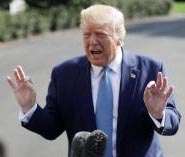 This Tweet Trump sent out last Tuesday supports that accusation. “As I learn more and more each day, I am coming to the conclusion that what is taking place is not an impeachment, it is a COUP, intended to take away the Power of the People, their VOTE, their Freedoms, their Second Amendment, Religion, Military, Border Wall, and their God-given rights as a Citizen of The United States of America!”
 Coast Contact