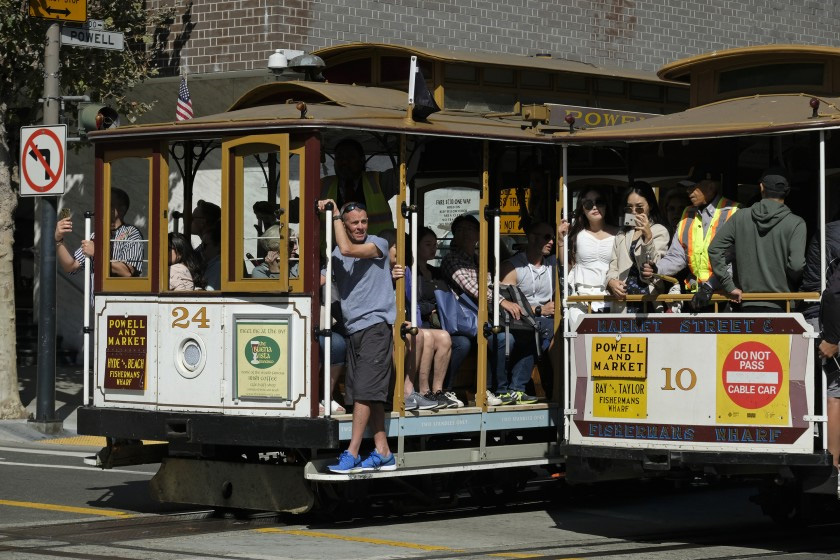
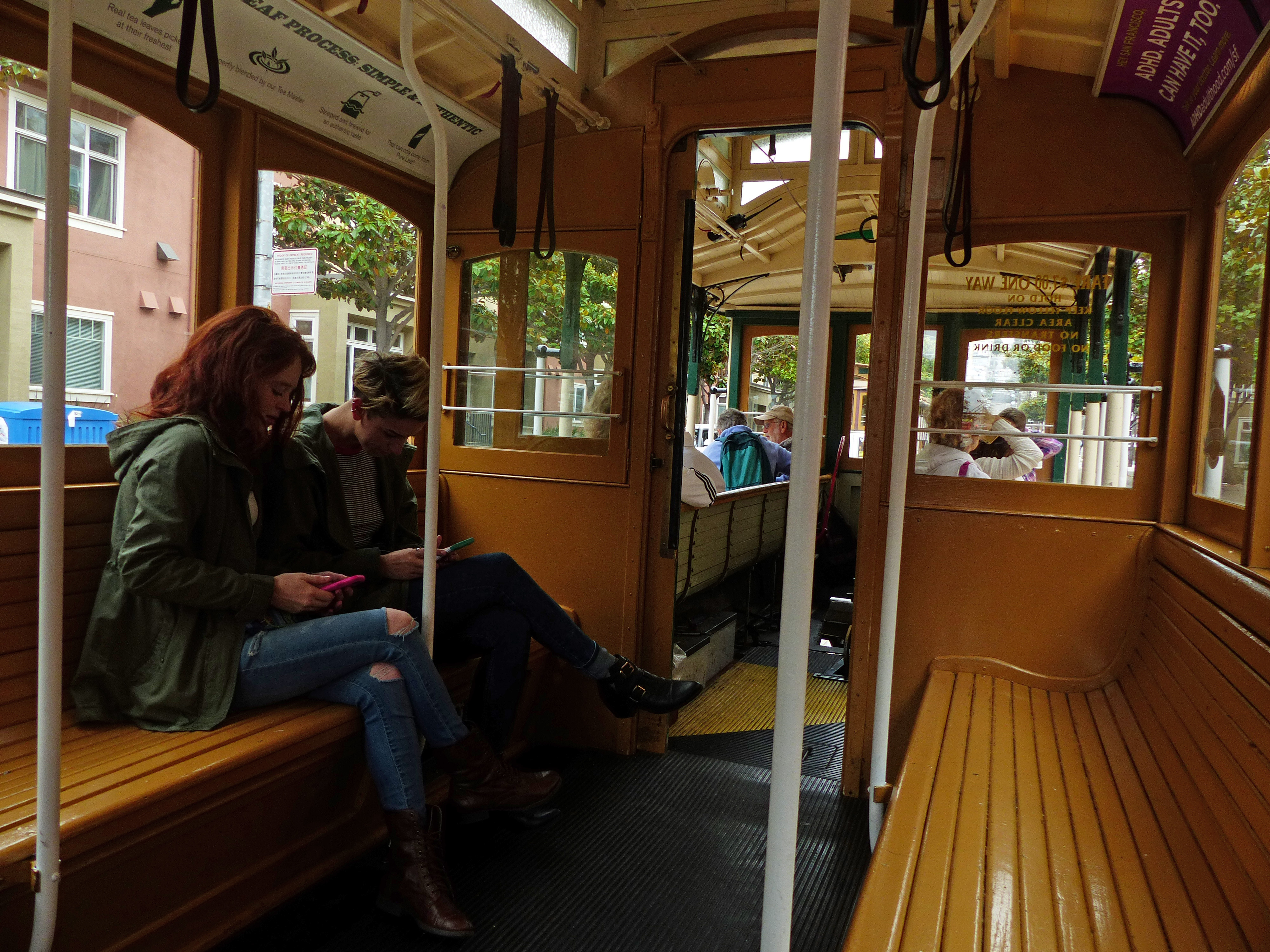
San Francisco’s cable cars will stop running for 10 days starting Friday for repairs. San Francisco Municipal Transportation Agency will be refurbishing gear boxes, braking systems, and everything else to ensure that everything is “running safely and reliably.” If you haven’t been to that city you should know that it is at least as exciting and interesting as Manhattan (NYC). The cable cars are more fun than anything at Disneyland. They connect downtown with Chinatown and Fisherman’s Wharf.
When we visited Toronto Canada for the first time in 2009 we were astonished by the number of high rise buildings under construction throughout the city. Walking on Yonge Street there were signs announcing plans for more sky scrapers to be built within the coming year or two. When we visited Toronto again in 2017 the construction of new sky scrapers had not diminished.
Yonge Street Toronto
There is a high rise (skyscraper) construction boom under way in many major cities all over North America.
The Comcast Development Center in Philadelphia is adding a 1,121-foot-tall building to that city’s skyline.
Chicago is adding the Vista Tower. It is an 1,186-foot tall luxury hotel and condo tower. There is actually 50 high rises of 100 feet or more under construction in Chicago.
After 1992, when the California Plaza was built there were no new skyscrapers in Los Angeles until 2003. That new high-rise was just a 35 story building. Then starting in 2009 there has been a resurgence in high-rise construction throughout Los Angeles. The Wilshire Grand was just completed last year as the tallest building west of the Mississippi. It is about to be eclipsed by another high-rise at 1107 feet.
77-story planned Bunker Hill tower drawn into a photo of the area
The first phase of a massive redevelopment of the old Boston Garden site will ultimately add 1.87 million square feet of shops, restaurants, offices, hotel rooms, and residences and is set to finish sometime this year. Eventually, the joint project between developers Boston Properties and Delaware North will include a 38-story residential tower, 21-story office tower, as well as new transit connections and outdoor space.
There 14 high-rises under construction in San Francisco right now. The Salesforce Tower will be that city’s new tallest building beating the famous TransAmerica Tower.
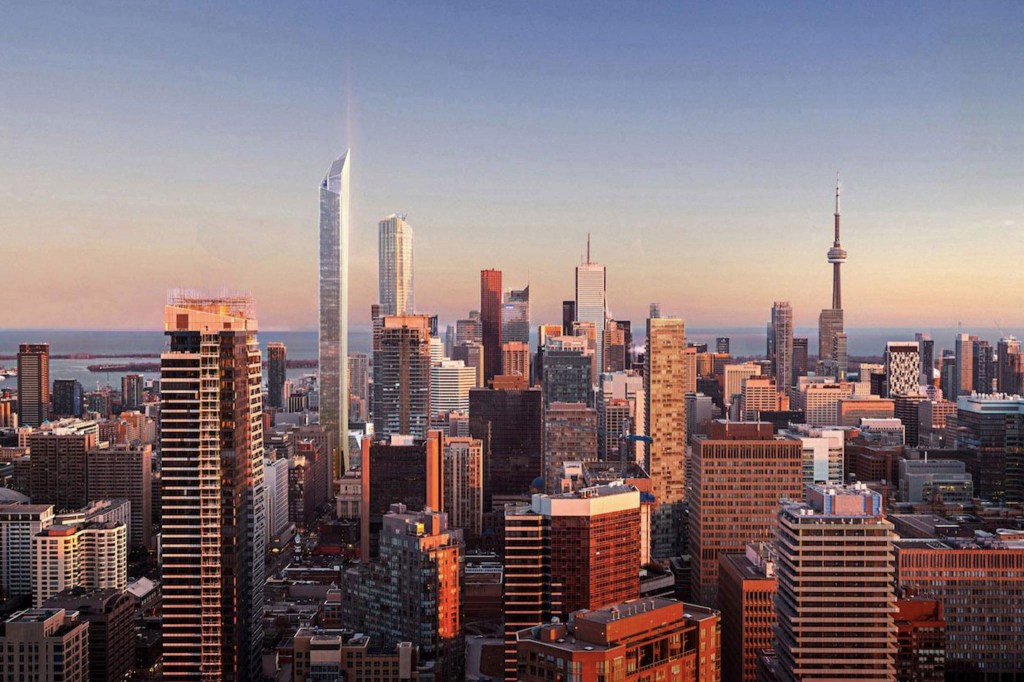
Meanwhile Toronto Canada is trying its very best to be second to New York City with traffic, subways and over 60 high rises over 500 feet. Most of them are jammed into their downtown area. The tallest is 978 feet. A 1,043 foot tall 85 floor building is under construction now an even taller 98 story building is awaiting approval of their city council.
Artist conception – Tallest building tower “Yonge Street Living” is proposed for downtown Toronto
Most of these projects are a combination of offices, hotels, stores, and residences. Living closer to the center of the city means less commuting. That translates to less traffic on our congested roads and easier access to museums, entertainment centers, and hospitals. Add to that is we like living in busy cosmopolitan cities. The proof is the tourism to NYC, Las Vegas, and downtown San Francisco.
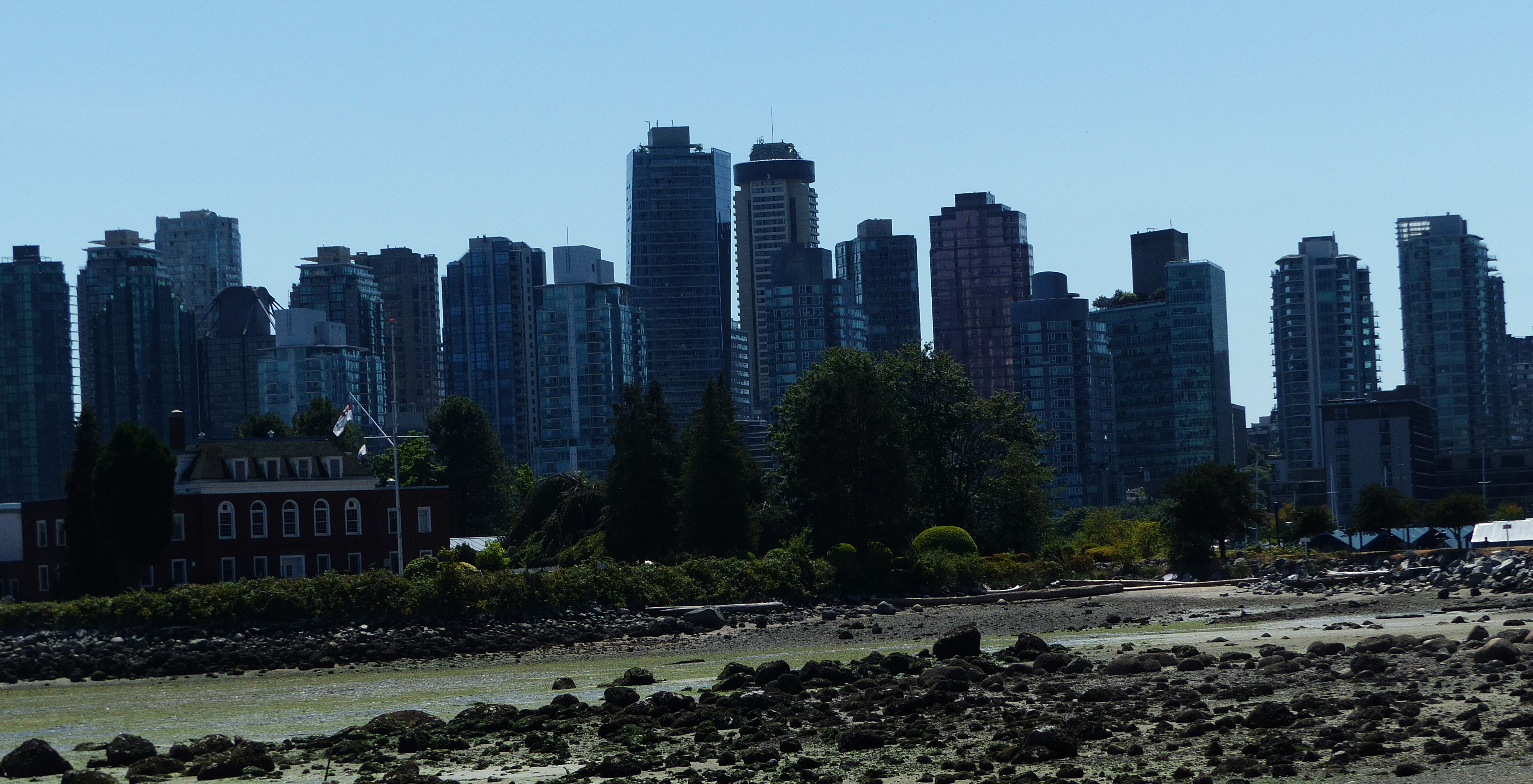
Just this past July 22 we returned from a trip that included five days in Vancouver, British Columbia, Canada. While there we rode one of the Hop On Hop Off city tours. The guide was obviously quite knowledgeable about the city. It is a city of many very attractive 20 to 30 story high buildings. She informed us that the cost of the apartments in those buildings started at $1 million (Canadian). Although the Canadian dollar is currently about 30 cents lower in value than the American dollar it has been almost identical during the past few years. So the cost of living in Vancouver is high.
Meanwhile here in California the cost of homes has been equally as high. The median home price value in San Francisco is over $1 million reports Zillow. They say it’s a 12.7% increase during the past year and predicts even higher prices in the coming five years.
Down here in Los Angeles Home sales reached a nine-year high in July, prices climbed 5.5% from a year earlier, according a report out Tuesday from CoreLogic a company that tracks home prices throughout southern California. The Los Angeles Timesreports that Zillow says “Los Angeles and Orange County are the least affordable housing market in the country.”
Interestingly Portland, Oregon is the city that has experienced the least impact of the inflated home prices with median home prices of about $327,000. However not to be out done their prices have also risen over 10% in the past year.
However as the price of homes has risen the average family income has not risen by comparable amounts. In Portland, Oregon median family income was $55,571 in 2013. In Los Angeles that number was $48,466. Using the old standard of qualifying to buy a home 2½ to 3 to times your family annual income that calculates to a home costing $150,000. No wonder so many young adults are still living with their parents.
What is causing inflated home prices? Googling that question shows lots of analysis but no answers. Here is my take.
Most cities have run out of space for new building. That translates into more high rise housing. Those kinds of structures are expensive to build. Those buildings are townhouse/condominiums translate into expensive homes. Even Los Angeles, a city known for single family homes, has turned to more apartment housing because travel times have become too long (a 1½ hour drive to the airport or to work has become the norm). Average families simply cannot afford that style of housing so they move to the outer edge of the city. That’s where I live.
Thousands of people from other nations have been buying homes in the United States and Canada because it is a safe place to invest their money. That demand has driven up the price of American and Canadian homes. There have been a series of news items and opinion pieces in the Los Angeles Times that have pointed to this growing trend. 47% of Vancouver is now populated by Asians. The San Gabriel Valley area of metropolitan Los Angeles has experienced a growing Asian population to the point that many long time residents have voiced their concern about the changing demographics. Those voices made their way into the newspaper.
http://www.bankrate.com says, “International homebuyers have been pouring billions of dollars into the U.S. housing market as they take advantage of lower home prices and a weaker dollar.” “When buying a home in the United States, foreign buyers often pay cash because it’s a much easier, quicker process, says real estate agent Baro Shalizi of Shalizi Real Estate, in Santa Fe, N.M.” When an elderly acquaintance of mine sold his home for more than $700,000 the buyer paid for it in cash. That all cash offer made the sale easy and eliminated all other offers.
Now cities are confronted with the question of providing decent housing for young families that have median incomes. Without the needed homes there is an impact on the buying habits of those families. They will live with their families. That translates to reduced purchases of refrigerators, lawn mowers, and everything else that homeowners buy.
There will be one of three consequences or perhaps some combination. 1) Government does nothing and young families double up to buy a home or continuing living with parents. 2) There will be subsidized housing for the median income families. 3) More people living farther from the big cities in order to buy a home and that results in more commuters.


 Coast Contact