Bloomberg Businessweek sells advertising that looks like its columns. Companies and countries use this methodology to promote their business friendly atmosphere. The sections are clearly marked as “advertising section.” In one edition the United Arab Emirates bought pages that promoted the business opportunities in those nations. The information was presented in a format that leads readers to believe the articles were being presented by the magazine. The font sizes and the presentations give the appearance that they are indeed being presented by the magazine publisher.
In the October 22, 2012 edition there was a 13 page presentation that was sponsored by Japanese companies. It is impressive and informative. It makes me realize how far other counties have developed compared to the United States. The article is long but is worth your time. I was especially impressed by the fact that a Japanese company is updating the British railway system. Another has developed quick set up homes for people who have been displaced by natural disasters (think the homes damaged by Hurricane Sandy).
Following is very abridged version of the article with significant statements in bold text.
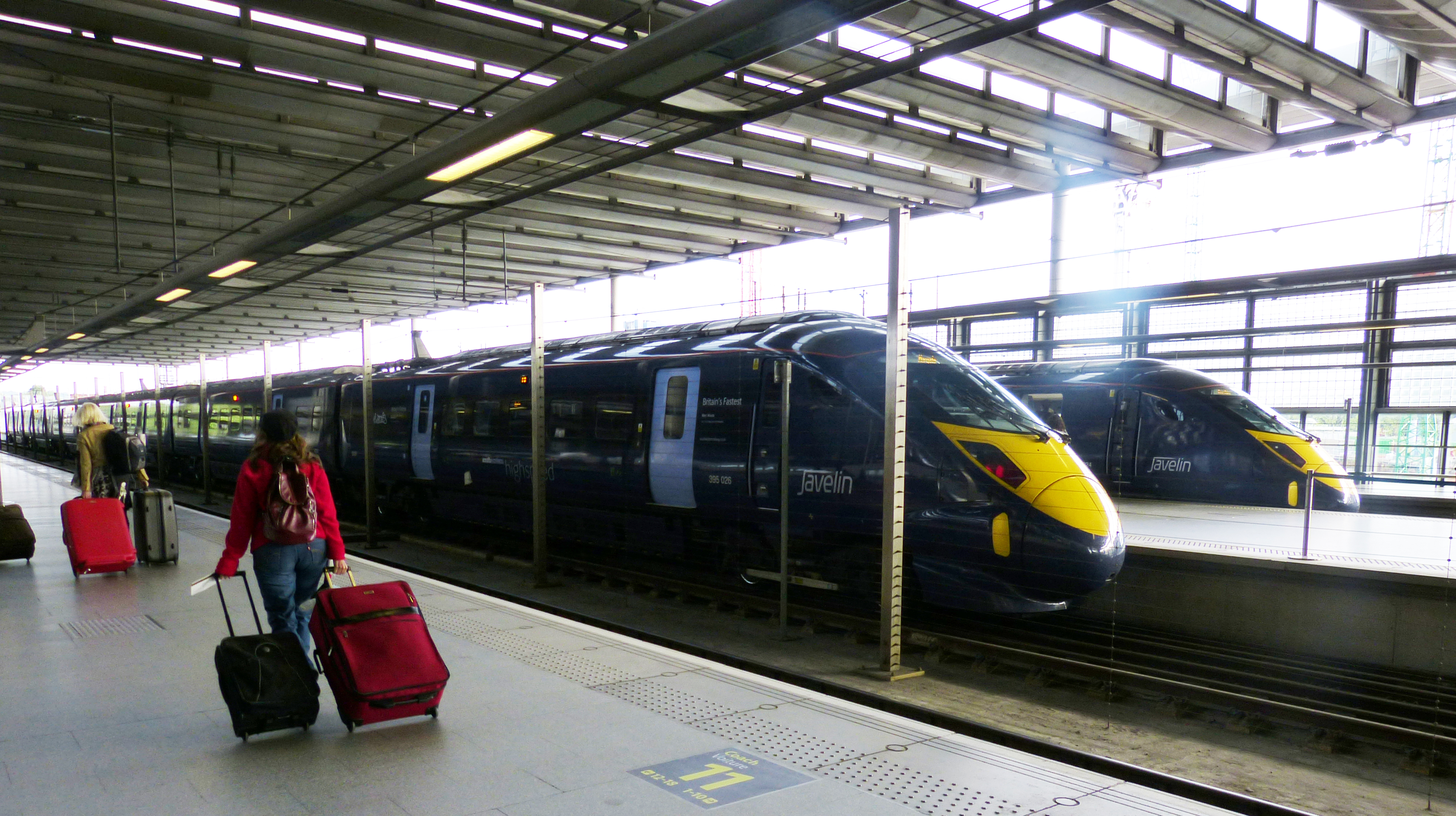
A new market for Japanese rail technology is the U.K., the original home of railways. Hitachi Ltd. has formed a consortium with a British company to supply a total of nearly 600 high-speed rail carriages, and the supporting maintenance infrastructure, starting delivery in 2017. The Hitachi Super Express trains will be manufactured in a newly built factory in the north of England. The total value of the project. including the maintenance and repair centers to be constructed throughout the U.K., is estimated at between ¥400-¥500 billion ($5.1-$6.3 billion).
These new trains will replace the U.K.’s aging Intercity fleet on the East Coast Main Lines and the Great Western Main Lines. The lightweight construction of the trains (between 15 and 40 percent weight reduction per seat) lowers energy consumption of the bimode units, and this light weight also helps reduce the travel time for the growing number of passengers on the routes where these trains will be operated.
High-speed shelters
Following the Great East Japan Earthquake, over 340,000 people were displaced, with most taking refuge in emergency shelters, such as school gymnasiums, until more permanent housing could be arrangec for them. The lack of privacy for extended periods (blankets or temporary cardboard partitions were often the only divisions between family groups) caused severe additional emotional stress to many survivors.
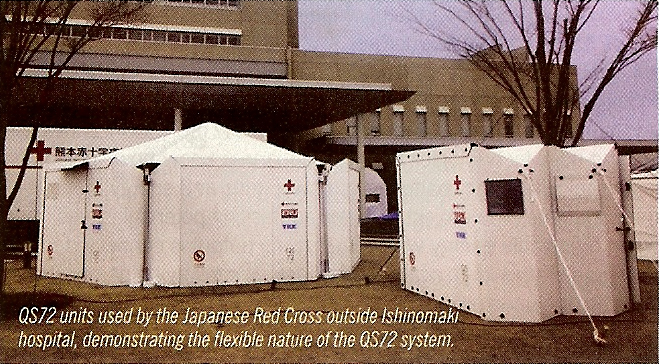
Photo was scanned from Businessweek
Accordingly, a need was perceived for lightweight flexible structures that can be quickly transported and erected to provide such spaces. Enter the QS72 from Daiichikensetsu Ltd., with “QS” standing for “Quick Space” and “72” representing the number of hours within which such components can be deployed to provide floors, walls and roofs for meeting rooms, emergency clinics, toilets and other areas, in the time when disaster survivors are at their most vulnerable psychologically.
Constructed of polypropylene, the system requires only a few people and no tools to assemble. Using a lightweight construction method providing thermal insulation, the units can be linked together in a variety of ways to serve various needs of a displaced community. The basic construction recalls the principles of origami in the way the different parts fold and unfold to create the spaces. A single unit can temporarily accommodate a small family until more permanent accommodations can be arranged and constructed. Following this, the unit can be combined with others and reused as a community space, for example, or a store or medical center. Indeed, following the March 2011 quake, 100 units were donated to the Japanese Red Cross, and used as general purpose structures in lshinomaki, supplementing the existing hospital facilities.
Keeping in touch during disasters
A key issue following a disaster is the effective dissemination of information. Making use of one of the best IT infrastructures in the world, the Japanese government has developed Disaster Guidelines and Action Plan for IT, with a two–pronged emphasis on the preservation of life and the well-being of the survivors.
First, the safety of inhabitants of the affected area, and the status of emergency services, is confirmed. Following this immediate response, the system changes to provide information to survivors about vital infrastructure elements (utilities, communications and transportation). The rapid growth of smartphone use in Japan allows for rapid and easy sharing of information. Already, earthquake early-warning systems are incorporated into the cellular network, and internet sites designed for smartphones are planned that will allow parents to check on the safety of their children at school, as well as to use the newly developed J-anpi system to check on others’ safety and reassure friends and family of their own.
Lessons learned from the March 11 disaster that have been incorporated into the plan include the use of alternative channels (websites, email and social network services) beyond the usual emergency number. These channels can also disseminate information, using cloud services to ensure continuity of service, and supplement radio and TV broadcasts. The Prime Minister’s Office also operates a Twitter account, allowing the government to “push” up-to-the-minute information to millions of smartphone users.
In the event of future disasters, Japan hopes to save lives, and to improve the lives of survivors through such implementations of technology, and to share these techniques and technologies with other nations. – H.A.

 Coast Contact