Visiting Yosemite National Park

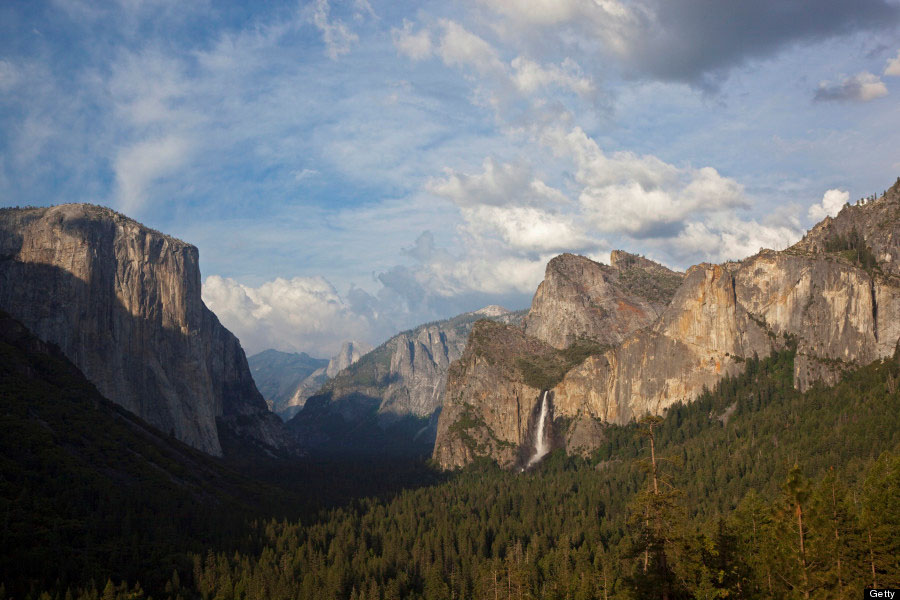
View of Yosemite Valley at tunnel entrance Highway 41

It’s time I spent more effort on some good times rather than focusing on the bad.

When my children were small we traveled to Yosemite National Park or Sequoia National Park for nine years in succession. The first time when our first child, a baby boy, was about 1½ years old. We may have skipped a year after our baby girl was born.

It was an opportunity to get away from the city. Camping with small children is work. Still we enjoyed the change of environment.

Our favorite camp site were the Housekeeping tents in Yosemite Valley. Housekeeping Camp units consist of three concrete walls, a concrete floor, double canvas roof and a fourth curtained wall. The curtain separates the sleeping area from a covered patio area with a privacy fence that’s furnished with picnic table and bear-proof food storage containers. Each unit also includes a campfire ring with grill grate. There are public restrooms with toilet stalls and sinks. Showers are available for a fee. Electric lighting is limited to a single box near the bed racks and there is limited access to phones. You must provide your own linens and so most people bring sleeping bags. The tents are an upgrade from a conventional tent. A nearby general does have basic food supplies.

The Merced River adjoined the Housekeeping Camp area and in 6 minutes and .2 of a mile you could walk to Curry Village. Besides stores and a restaurant that is the heart of daytime activities and nighttime campfire events provided by park rangers.

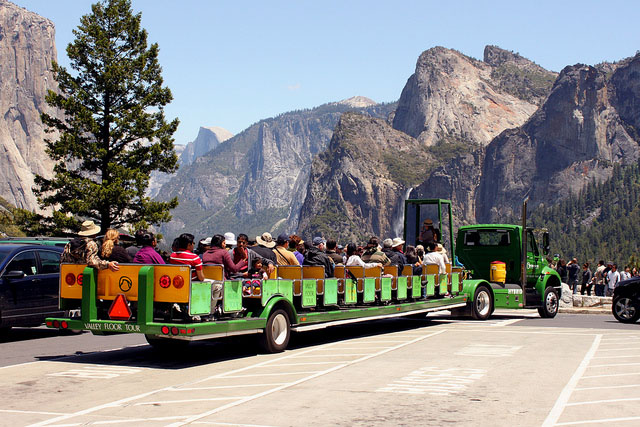
There are tram tours of Yosemite Valley, bikes for rent, horseback riding, and hiking trails that even your grandmother can handle.

There is always the possibility you will see a bear or some deer. You will never forget the scenery. As you enter the park from Los Angeles through Fresno there is a grove of Redwood trees. A tram ride through that grove is worth your time. The ride to Glacier Point overlooking Yosemite Valley is equally exciting  with a view that is spectacular of the valley below and Half Dome.
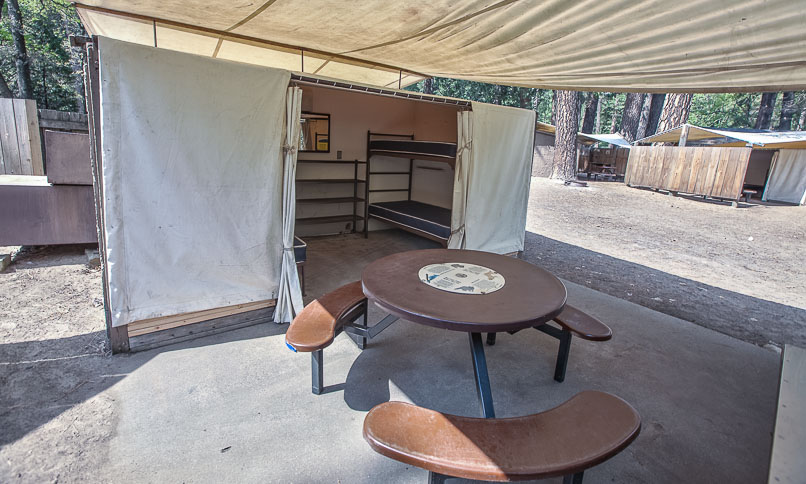
Housekeeping Cabin
Housekeeping Cabin
Housekeeping Cabin in the evening


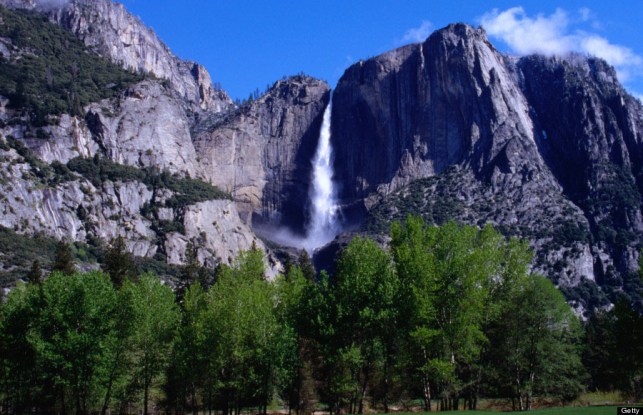
Upper Yosemite Falls

Upper Yosemite Falls

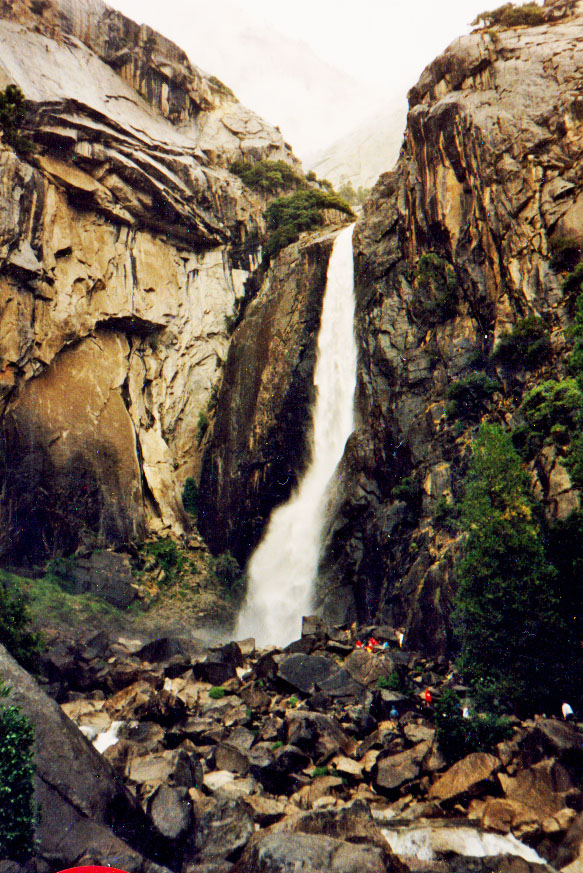
Lower Yosemite Falls in a dry year
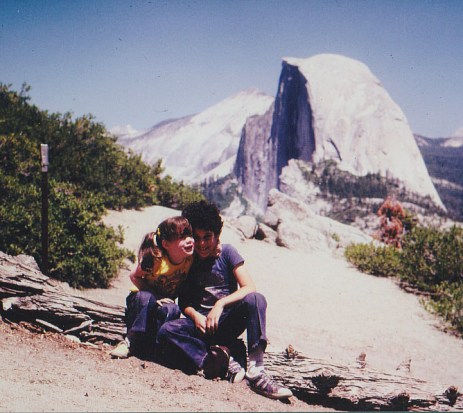
Half Dome from Glacier Point
Open top Tram
Open top Tram


Environmentalists Gone Wild

Environmentalists have the desire to return the earth to its native state EVERYWHERE.  Thus their idea is to limit national park access to hikers only.  No cars or other vehicles should be permitted to enter.  Entering Yosemite Valley would only be available for the hardy who can hike there from the park entrance.  Riding in an inflatable raft in the Merced River would be banned.  Grocery stores and gift shops would be closed.

The Environmentalists would also remove the concrete walls of the Los Angeles River.  It is really a wash that only holds rain water during the winter months.  There are no streams or creeks that feed into this wash.  There are no springs from surrounding hills that trickle in.

Despite the fact that the concrete walls protect the city from flooding that was prevalent in the first half of the 20th century and all times earlier the Environmentalists want the concrete walls removed to restore the natural appearance of the wash.  They have done such a good job of promoting their vision that a group called L.A. River Revitalization Corp. have convinced the Army Corp of Engineers to consider proposals costing at least $444 million for making the banks of the wash more environmentally pleasing.  At the high end the cost would be $1.06 billion.

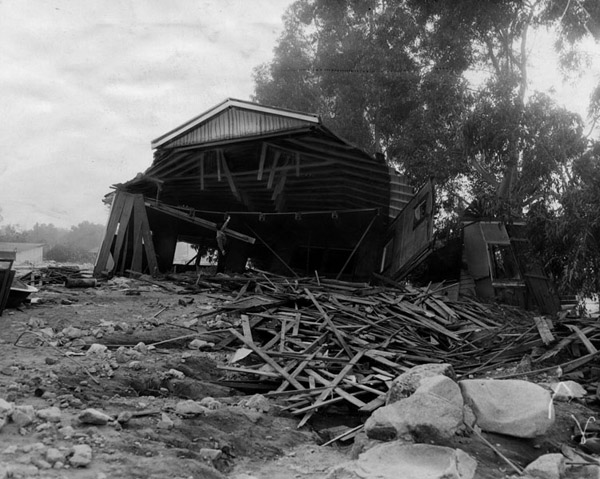
1934 flooding before the LA River was controlled

A house that was washed a block away from the river, 1934

 Amnesia seems to have affected both our government officials and the general public.  As reported in the Los Angeles Times on February 12, 1992 “City emergency workers in helicopters and rubber boats rescued 48 people stranded in cars and other vehicles as floodwaters rose rapidly on Burbank Boulevard and other streets that run around and through the basin.”

kayaking-the-los-angeles-river

The concrete Los Angeles River was built to protect the city from massive flooding.  Sepulveda Dam, which was constructed in 1941, protected downstream neighborhoods (and allowed others to be built); the postwar concretization of the upstream riverbed allowed the development of the San Fernando Valley.  All of the homes and businesses from Canoga Park going downstream could be seriously impacted if those concrete walls were removed.  Kayaking down the Los Angeles River is not a necessity.  Protection from flooding is a necessity.