Beware of scams!
A list of charitable organizations active in the nation
American Red Cross, 1-800-733-2767
Doctors Without Borders, 1- 888-392-0392
Habitat for Humanity, 1-800-422-4828
The Salvation Army, 1-800-725-2769
UNICEF, 1-800-367-5437
Beware of scams!
A list of charitable organizations active in the nation
American Red Cross, 1-800-733-2767
Doctors Without Borders, 1- 888-392-0392
Habitat for Humanity, 1-800-422-4828
The Salvation Army, 1-800-725-2769
UNICEF, 1-800-367-5437
The Common Trait of Highly Productive People, Companies, and Countries is a sense of urgency. In just the past 24 hours we have had a human tragedy in Haiti. No one knows how many people have been killed by the earthquake that has devestated their capital city, Port- au- Prince. The president of the United States has said that aid will be sent immediately. CNN has already reported the sighting of American military personnel. That is an example of responding with a sense of urgency.
America’s response to the bombing of Pearl Harbor was accomplished with a sense of urgency. Henry Paulson’s message to Congress for aid to the banking community was quickly answered with TARP. However, America’s response to the devastation brought on by Hurricane Katrina did not show the same sense. California’s serious debt problems have not been addressed with a sense of urgency.
Corporations have also had mixed responses to their predicaments. General Motors did not apply sensible action to their faltering sales for years. That is a company that didn’t need urgency. All they needed was attention and they failed. Union Carbide showed no sense of urgency in the chemical spill in Bhopal, India.
The entertainment and news industries are fast to respond. With falling rating it didn’t take long for NBC to determine that Jay Leno’s primetime show had to move to late night or be canceled. The making of Avatar took two years (excluding the writing). All the networks have significant reporters in Haiti in just 24 yours. All of them had reports on their news programs within hours of the earthquake.
We need a sense of urgency in getting our economy functioning properly. The politicians would rather squabble. Their behavior ought to give us the motivation to show them the door. Unfortunately democracy does not provide a sense of urgency.
9 Things You Can Do to Be Happy in the Next 30 Minutes
Surprising ways to instantly improve your mood
by Gretchen Rubin on http://www.realsimple.com
Being happier doesn’t have to be a long-term ambition. You can start right now. In the next 30 minutes, tackle as many of the following suggestions as possible. Not only will these tasks themselves increase your happiness, but the mere fact that you’ve achieved some concrete goals will boost your mood.
1. Raise your activity level to pump up your energy. If you’re on the phone, stand up and pace. Take the stairs instead of the elevator. Put more energy into your voice. Take a brisk 10-minute walk. Even better…
2. Take a walk outside. Research suggests that light stimulates brain chemicals that improve mood. For an extra boost, get your sunlight first thing in the morning.
3. Reach out. Send an e-mail to a friend you haven’t seen in a while, or reach out to someone new. Having close bonds with other people is one of the most important keys to happiness. When you act in a friendly way, not only will others feel more friendly toward you, but you’ll also strengthen your feelings of friendliness for other people.
4. Rid yourself of a nagging task. Deal with that insurance problem, purchase something you need, or make that long-postponed appointment with the dentist. Crossing an irksome chore off your to-do list will give you a rush of elation.
5. Create a more serene environment. Outer order contributes to inner peace, so spend some time organizing bills and tackling the piles in the kitchen. A large stack of little tasks can feel overwhelming, but often just a few minutes of work can make a sizable dent. Set the timer for 10 minutes and see what you can do.
6. Do a good deed. Introduce two people by e-mail, take a minute to pass along useful information, or deliver some gratifying praise. In fact, you can also…
7. Save someone’s life. Sign up to be an organ donor, and remember to tell your family about your decision. Do good, feel good―it really works!
8. Act happy. Fake it ’til you feel it. Research shows that even an artificially induced smile boosts your mood. And if you’re smiling, other people will perceive you as being friendlier and more approachable.
9. Learn something new. Think of a subject that you wish you knew more about and spend 15 minutes on the Internet reading about it, or go to a bookstore and buy a book about it. But be honest! Pick a topic that really interests you, not something you think you “should” or “need to” learn about.
Some people worry that wanting to be happier is a selfish goal, but in fact, research shows that happier people are more sociable, likable, healthy, and productive―and they’re more inclined to help other people. By working to boost your own happiness, you’re making other people happier, too.
The “Golden State” had a golden age in the late 50s and throughout the 60s. It was made the official State Nickname in 1968. Freeways were under construction everywhere. The educational system was flourishing from kindergarten through university. Industries were booming all over the state. Los Angeles was closing in on Chicago as the largest manufacturing area in the country. The state’s population was burgeoning.
Then politics, corruption, special interests, and incompetence took control. Added to that was Gerrymandered representation that resulted in the grid lock that has held the state in its grip ever since. Is it no wonder that Gary Davis, past governor, was recalled.
Since Arnold Schwarzenegger became governor everything has become worse. Even beyond the $20 billion deficit there are issues related to everything from education to water.
As things stand now the next governor will not be able to improve the way this state functions given the outmoded state constitution. The state constitution has 522 amendments and is 110 pages long. It was adopted in 1849. Initiatives approved by voters have tied the hands of the legislators. As an example there is an article titled PUBLIC HOUSING PROJECT LAW, and another titled MOTOR VEHICLE FUEL SALES TAX REVENUES AND TRANSPORTATION IMPROVEMENT FUNDING.
Repair California, Sponsored by the Bay Area Council, a San Francisco area business group, is proposing two initiatives that will (1) “Allows voters to place question of calling a constitutional convention on the ballot.” and (2) “Calls a limited convention to propose changes to state constitution.“
Many newspapers throughout California have given editorial support to this effort. The Los Angeles Times has given wholehearted support to this idea. The idea of a constitutional convention has been covered extensively in the media since the publication of Jim Wunderman’s Opinion Editorial in the San Francisco Chronicle.
Californians have the opportunity to fix state
San Francisco Chronicle, January 3, 2010
A smart convention plan
Los Angeles Times, January 3, 2010
Anything but the best is unacceptable
Lompoc Record, December 13, 2009
Our View: Clean up mess in governance
Pasadena Star-News, December 12, 2009
This is our home. We need to take it back from the politicians.
Wescom Credit Union has been making me nervous for at least a year. It’s a large organization based in Pasadena, California. The have had 43 branches in Southern California from Santa Maria to San Diego and inland to Temecula. They have been rated poorly, are losing millions of dollars and now will close 12 branches. They got in trouble lending to those who could not afford to repay their loans. Just like Citi Bank, Wachovia, and all the rest.
Arianna Huffington has been running a campaign to encourage people to move their savings to good quality community banks. Arianna writes “The idea is simple: If enough people who have money in one of the Big Six banks (the four we mentioned earlier, plus Goldman Sachs and Morgan Stanley) move it into smaller, more local, more traditional community banks, then collectively we, the people, will have taken a big step toward re-rigging the financial system so it becomes again the productive, stable engine for growth it’s meant to be.”
It’s hard to find the link but here it is at http://moveyourmoney.info/. Just enter you ZIP Code to find the good banks in your area.
Al-Qaeda’s leaders must have been laughing as they watched CNN and ABC news. After all it looked like the Keystone Cops as the United States tried to get its footing on the “war on terror.” Wait may be this is all the work of Inspector Clouseau.
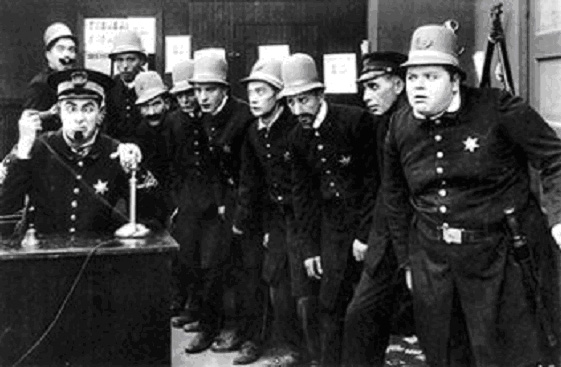
Here are the scenes:
>A father tells the CIA that his son has become a terrorist and no one stops that young Nigerian from flying to Detroit.
>Seven CIA operatives are killed by an Al-Qaeda double agent. This is definitely Not funny!
>A man walks the wrong way through a Newark, New Jersey air terminal but the guard left his post a moment before and no one stops the intruder. The security cameras are on but the recording device has not worked in many days. Passengers must be re-screened and while they are waiting a traveling guitarist has everyone singing.
>Meanwhile the head of homeland security tells everyone on all the Sunday morning talk shows that “the system worked.”
>Where is the President of the United States? Oh, he’s vacationing in Hawaii. When he finally does arrive in Washington D.C. he tells us the “system failed.” Really?
What part of this stupidity do I have wrong?
Smart people sold their S&P 500 Index accounts, other equity mutual funds, and many of their stock holdings when they saw the market had dropped 10% to 15% from its peak. Were you asleep or what? The S&P 500 Index peaked at 1576.09 on October 11, 2007. Don’t tell me you didn’t notice the market was going down.
As you read the various articles about the change in our wealth over the past decade you come to the conclusion that all your savings and high earning investments in the stock market were for naught. On average you would have been better off putting your money in bank CDs because you would have at least earned some return. This simplistic view assumes that no one looks at their investments. Those writers think that most people just follow the broker’s advice and never question anything.
I contend that most people are not that lazy. After all, almost every news broadcast includes stock index averages. We all know their names. Dow Jones Industrial Average, Nasdaq, and S&P 500. Most of us looked at our investments. Each of us made decisions about those investments. I do not accept Ali Velshi’s assumption that most of us were dunderheads who simply followed broker advice without question. I am sure some people did blindly follow the “buy and hold” pitch given by the brokers.
Initially I did accept the notion that all of us blindly followed broker advice. Wait! We all did do some analysis. Most of us did read the newspapers. Many did make mistakes but some of us did the right thing and earned large amounts of money.
When the DJIA hit 666 last March I was skeptical that the bottom was there. I promised myself that after the average had grown by 20% I would reinvest. Then I looked at my earnings in GNMA and decided the market was too volatile. My decision. I made a mistake. I could have grown some of my money by about 63 %. My decision.
We read, we listen and we decide. There is still money to be made but we all take a chance. The poorest among investors simply can’t afford too much risk.
An assistant principal and school board member from the community of El Monte in the Los Angeles area was visiting his wife’s hometown. While out to dinner with friends he, along with five others, was kidnapped and murdered. The full story below was reported by the Los Angeles Times.
MEXICO UNDER SIEGE
By Tracy Wilkinson, January 3, 2010, Reporting from Gomez Palacio, Mexico – They were aware of the dangers. Agustin Roberto “Bobby” Salcedo and his wife, Betzy, knew that this town, like much of Mexico, was no longer the tranquil spot it had been.
“I’ve been coming regularly,” Salcedo’s widow said Saturday of her hometown. “We knew how bad it had become.”
And yet, the Salcedos ventured out for a few beers the night before New Year’s Eve.
“We were just going out with a group of friends,” Betzy Salcedo said, speaking slowly and casting her eyes downward. “You are careful, you look around, but you never think this kind of thing can happen . . . to innocent people. We were having a good time. Then we were in the mouth of the wolf.”
Hours later, Bobby Salcedo was dead, hauled away from the bar with five other men, their bodies dumped in a dried-grass field on the outskirts of town.
Arrangements were being made Saturday to repatriate Salcedo’s body. The 33-year-old, who was born and raised in the Los Angeles area, was an assistant principal and school board member in El Monte.
His slaying underscores the random volatility of the violence in Mexico and the ease with which the pain it causes can seep past the country’s borders.
The Salcedos might also have been lulled into a false sense of security by outdated memories and the comfort of old friends.
Betzy Salcedo cited an old Mexican saying: He who doesn’t owe anything has nothing to fear. She always figured that people who had nothing to do with drug trafficking would not be targets in the country they loved.
One can follow the gruesome news out of Mexico, much of it involving the government’s ongoing war against powerful drug cartels, yet still feel a sense of immunity — that “it can’t happen to me,” that the dangers are remote. It is a common thought among many Mexicans, a defense mechanism, perhaps.
But now Betzy Salcedo and her family are bitter. Mexico has become a poison to them.
The Salcedos and their companions had ended up at the Iguanas Ranas bar on Miguel Aleman Boulevard in Gomez Palacio on Wednesday night.
By day and to the uninitiated, the strip may seem harmless enough. There are dives with names like Mens Club-Boomerang, but also taco stands and convenience stores. The Iguanas Ranas is painted almost whimsically with, as its name suggests, bright yellow and green frogs and iguanas.
At night, however, the environment shifts. “We don’t even go out at night anymore. We are exposed to everything,” said Gerardo Gonzalez, the bar’s accountant.
Routinely, he said, gunmen commandeer cars from passing motorists, demand bribes, enter bars to lord over the patrons. “We are living in times of terrible, daily crime,” said the lifelong Gomez Palacio resident, whose nephew was kidnapped and shot to death on Christmas Eve.
It didn’t used to be like this. Until about two years ago, the Iguanas Ranas admitted families — parents with their children. But then the violence started. About that time, several men were kidnapped from the place and killed.
This year the bar has endured a bomb threat, an extortion threat and robbery. Things have gotten so rough that the owner is considering shutting it down, Gonzalez said.
Betzy Salcedo, 26, remembers the days of her youth, when she and friends could go out at any time of day or night without thinking twice. “That’s all completely gone,” she said.
Bobby Salcedo’s brother Juan, a banker in the Los Angeles area, added: “I’ve read all the stories. Sixteen bodies found here, bodies there. But I always thought it was [happening to] bad people. You mind your own business and you’ll be fine.”
Gomez Palacio is an industrial city in the northern part of Durango, one of the deadliest states in Mexico last year as two drug gangs battled for territory. That battle is part of the nationwide fight involving drug traffickers and the government that has claimed more than 15,000 lives in three years.
In December federal police intercepted a shipment of more than 400 pounds of crystal meth, a few days after intercepting a similar amount of cocaine, both being transported through Gomez Palacio toward the U.S. border.
Police stations in Durango state came under grenade attack Dec. 14. The former mayor of Gomez Palacio was kidnapped Dec. 6 (and eventually released) and the local police chief, Roberto de Jesus Torres, was gunned down the evening of Dec. 2 as he left his home.
On New Year’s Eve, a few hours after Salcedo’s body was found, two detectives were kidnapped in the middle of the day. Their bodies were left in the bed of a pickup on a major highway on the outskirts of Gomez Palacio.
Investigators reported no new developments in the Salcedo case Saturday. They repeated that they were looking into whether any of the people killed with Salcedo had criminal ties, but had found none.
Betzy Salcedo said none of her group was involved in drug trafficking; the victims included one of her oldest friends, Luis Fernando Santillan Hernandez, 27, a lawyer, and his two younger brothers. Another victim, Javier Gerardo Garcia Camargo, 28, was married to her best friend.
Gunmen armed with rifles burst into the bar about 2 a.m. Thursday; there were conflicting accounts of what they were looking for, investigators said Saturday. Some witnesses said the men asked for the owner of a truck parked outside. Others said they demanded to know who was a cop.
The patrons were forced to the floor and ordered not to look as the gunmen hauled off Salcedo and the five others, who had been crowded around a pool table. They were shot to death and the bodies dumped along a canal in a poor neighborhood called September 11.
Although there were calls in the Los Angeles area to solve Salcedo’s killing and bring the guilty to justice, the norm in Mexico is impunity. Most crimes go unresolved.
Manuel Acosta, the lead investigator with the state prosecutor’s office, vowed in an interview Saturday to get to the bottom of the Salcedo slaying. Sometime next week, he said, investigators will begin pulling together testimony from various witnesses.
Betzy Salcedo said she hoped some good would come out of “all these horrors” — that a serious investigation would be launched and “this will not keep happening to innocent people.”
//
Copyright © 2010, The Los Angeles Times
—
January 5, 2010
A Leisure Guy comments about Mexico being the failed state on our border. He says “We know how to stop this: legalize the drugs and institute a broad array of treatment programs (which would cost much less than the hopeless ‘War on Drugs.’ “ I couldn’t agree more. Unfortunately there are too many people in the U.S. who will block these kinds of needed changes.
It is now more than 60 years since the end of the Second World War in Europe. This blog entry is in memory of the six million Jews, 20 million Russians, 10 million Christians and 1,900 Catholic priests who were murdered, massacred, raped, burned, starved and humiliated while the German and Russia peoples were looking the other way! Now, more than ever, with Iran among others, claiming the Holocaust to be “a myth,” it is imperative to make sure the world never forgets.
This linked story was originally aired on Sunday, June 24, 2007 on “60 MINUTES” about a long-secret German archive that houses a treasure trove of information on 17.5 million victims of the Holocaust. The archive, located in the German town of Bad Arolsen, is massive (there are 16 miles of shelving containing 50 million pages of documents) and until recently, was off-limits to the public. But after the German government agreed earlier this year to open the archives, CBS News’ Scott Pelley traveled there with three Jewish survivors who were able to see their own Holocaust records. It’s an incredibly moving piece, all the more poignant in the wake of this week’s meeting of Holocaust deniers in Iran.
Hitler’s Secret Archive
CLICK on This Link–
At Ben Gurion airport in Tel Aviv, screening is done in 30 minutes. The key? Look passengers in the eye!
After eight years of incompetent security at our airports (that’s eight years since 9-11-2001) the United States is finally getting serious. Or are they? This is a summary of a report appearing in the Toronto Star this past December 31.
While North America’s airports groan under the weight of another sea-change in security protocols, one word keeps popping out of the mouths of experts: Israelification.
“Israelis, unlike Canadians and Americans, don’t take s— from anybody. When the security agency in Israel (the ISA) started to tighten security and we had to wait in line for – not for hours – but 30 or 40 minutes, all hell broke loose here. We said, `We’re not going to do this. You’re going to find a way that will take care of security without touching the efficiency of the airport.'”
The first layer of actual security that greets travellers at Ben Gurion is a roadside check. All drivers are stopped and asked two questions: How are you? Where are you coming from? The questions aren’t important. The way people act when they answer them is.
…they’re not looking for liquids, they’re not looking at your shoes. They’re not looking for everything they look for in North America. They just look at you.
 Coast Contact