Today in History: January 30, 1933 Hitler becomes German chancellor
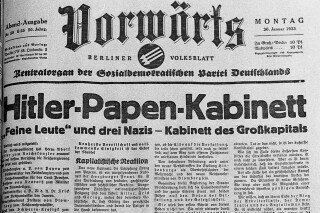
In a March 1, 2016 Vanity Fair article it reported that “Trump Kept a Volume of Hitler’s Speeches By His Bedside.”
In a March 1, 2016 Vanity Fair article it reported that “Trump Kept a Volume of Hitler’s Speeches By His Bedside.”
Almost 160 years after the Civil War — Nikki Haley, a leading contender for the GOP presidential nomination and former governor of South Carolina couldn’t answer the simple question “What was the cause of the Civil War?” Her disjointed response was “basically how government was going to run — the freedoms and what people could and couldn’t do.”
The Constitution Center provides this history. “The victory of Republican presidential candidate Abraham Lincoln in the 1860 elections convinced South Carolina legislators that it was no longer in their state’s interest to remain in the Union. South Carolina declared its secession from the United States. Citing “an increasing hostility on the part of the non-slaveholding states to the institution of slavery,”
Sadly in my own experience in the South is that Southerners are still in denial. That is the reason they still fly the Confederate flag in many places. Haley is not alone.
Despite all the support for Hamas in the United States and around the world supporters of Israel rally in Washington under heavy security, crying ‘never again’
Supporters of Israel are rallying by the thousands on Washington’s National Mall, voicing solidarity in the fight against Hamas and crying “never again.”
For those of you who do not understand the words “never again” it resulted from the killing of 6 million Jews by the Nazis in World War 2. Hamas wants to kill every Jew in Israel. That is their goal.


As we are celebrating another Rosh Hashana, the Jewish New Year, it is a good time to talk about the singularly most important play/musical about Judaism. Fiddler on the Roof.
No creative work by or about Jews has ever won the hearts and imaginations of Americans so thoroughly as the musical Fiddler on the Roof.
Everyone enjoys this show, whose musical numbers—“Tradition,” “Sunrise, Sunset,” “If I Were a Rich Man,” “To Life,” “Matchmaker,” and others—not only enliven Jewish weddings but are commonly understood to represent something essential about Jews and Jewishness. Jeremy Dauber opens his new biography of Sholem Aleichem with Fiddler because Fiddler is how the beloved Yiddish author is known—if he is known at all—to English readers. “Forget Sholem Aleichem,” writes Dauber, “there’s no talking about Yiddish, his language of art, without talking about Fiddler on the Roof. There’s no talking about Jews without talking about Fiddler.” And Dauber ends the book by tracing the stages through which Sholem Aleichem’s stories of Tevye the Dairyman and his daughters were transformed by successive translators and directors into what, by the time the movie version of Fiddler was released in 1971, the New Yorker’s normally severe critic Pauline Kael would call “the most powerful movie musical ever made.”
My grandfather was a dairyman in Ukraine too. He brought his family to America around the year 1905. That was the year fictional Tevye brought his family to America.
This article was written by Martin Cooper, President of Cooper Communications, supervised public relations for the Academy of Motion Picture Arts & Sciences for 10 years. It was published in the Warner Center News in Woodland Hills, California.
Sadly, the four brothers who left Poland for America and went from being penniless immigrants to owning one of the largest and most successful motion picture studios in the world, ended their lives in disharmony.
Many fairy tales feature a good sibling and a bad one. In the fairy tale of the Warner brothers, it was no different, except their story features four brothers: Harry, Albert, Sam, and Jack.
Looking back on the 100 years of Warner Bros., one can’t help but marvel at the incredible legacy left behind by these four brothers. Founding their eponymous studio in 1923, they faced numerous challenges throughout their reign, including navigating the censorship era, managing talent relations, and embracing technological innovation.
Harry (1881-1958), the eldest and company president, took on the role of protector, ensuring the family business stayed on solid ground. Albert (1884-1967) was Warner Bros.’ treasurer and head of sales and distribution, steering the company through acquisitions and ensuring its survival during the Great Depression. Sam (1888-1927) was the technological genius, responsible for the introduction of sound to film, forever changing the way movies were made and consumed. Ironically, Sam died in 1927, the day before The Jazz Singer, which he had nurtured, premiered.
The youngest, Jack (1892-1978), was the charismatic showman, the driving force behind the studio’s creative endeavors, was instrumental in launching the careers of stars like James Cagney and Bette Davis, and is the villain in the Warner’s fairy tale.
Harry Warner’s granddaughter, Cass Warner Sperling, penned a quasi-tell-all book about her family, Hollywood Be Thy Name. One chapter begins: “‘I’ll get you for this, you son-ofa-bitch!’ Harry Warner, raising a three-foot lead pipe
threateningly over his head, chased his younger brother down the streets of the Warners studio lot.”
In the same book, producer and screenwriter Milton Sperling recalls, “Boy did Harry and Jack fight. I spent most of my
time on the Warner lot carrying truce flags back and forth between them, just to keep them from tearing the studio apart.”
Jack was a tough and ruthless businessman. He was notorious for his abrasive and domineering personality, and was known to be difficult to work with. He was also accused of mistreating his employees and engaging in unethical business practices, such as double-dealing and price-fixing.
Additionally, he was often at odds with other Hollywood executives, and was involved in several high-profile legal disputes and controversies. All of these factors contributed to his reputation as a disliked and controversial figure in the film industry.
And the fact that he “named names” during the House Un-American Activities Committee hearings that resulted in the Blacklist, gained him no fans in Hollywood.
But the ultimate perfidy was how Jack Warner became president of the studio.
More than in most industries, motion picture studios’ balance sheets vary widely year to year. Warner Bros. was no different; by 1956, the studio was losing money, declining from a net profit of between $2.9 million and $4 million each of the previous three years.
In May 1956, the brothers announced they were putting Warner Bros. up for sale. Jack secretly organized a syndicate, headed by Boston banker Serge Semenenko, which purchased 90 percent of the stock. After the studio was sold, Jack, without informing his brothers, joined Semenenko’s syndicate and bought back all his stock. Shortly after the deal was consummated, Jack, now the company’s largest single stockholder, appointed himself its new president.
According to Lou Lumenick, film critic for the New York Post: “Harry suffered a debilitating stroke shortly
afterward, and a furious Albert never spoke to his younger brother again.”
“Jack Warner Jr. reports that when his jovial father visited Harry for the last time at his 50th wedding anniversary party, the ailing old man simply shut his tear-filled eyes to avoid his betrayer.”
“Jack Sr. did not even return to Hollywood for his eldest brother’s funeral, remaining on the French Riviera.”
The family rupture never healed.
Lawsuits and contentious relationships between Jack Warner and his stars were also not uncommon. In 1935, James Cagney sued him for breach of contract; in 1943, Olivia de Havilland brought suit against him for the same thing. In 1948, Bette Davis, Warners’ leading actress, angry with Jack, left the studio, along with others, after completing Beyond the Forest.
Humphrey Bogart and Davis were constantly being put on paid suspension for refusing to appear in what they considered to be low quality movies that the studio wanted to legitimize with their star power.
Sadly, the four brothers who left Poland for America and went from being penniless immigrants to owning one of
the largest and most successful motion picture studios in the world, ended their lives in disharmony. One died the day before his biggest triumph while two others become embittered over betrayal by their youngest sibling.
In the Warner Bros. fairy tale, few remember Harry, Albert and Sam; the black knight emerged triumphant.
We are now in the period of madness.
The Republican gubernatorial nominee in Michigan invoked a conspiracy that the Covid-19 pandemic and protests in the summer of 2020 after the killing of George Floyd were part of a decades-long plan by the Democratic Party to “topple” the United States as retaliation for losing the US Civil War, adding that the party wanted to enslave people “again.”
In a six-minute monologue at the beginning of the show, Tudor Dixon said that after the “attempted creation of the Black House Autonomous Zone outside of the White House,” referring to a cordoned off area near the White House erected by activists, that Democrats were using this moment to “topple” the US.
During the Civil War, the Democratic Party itself was divided on the issue of slavery as some Democrats wanted to expand slavery in the West while others wanted to leave it up to referenda in the new territories. It was that divide that led to President Abraham Lincoln’s victory in the 1860 election.
More than 100 years later, however, after the passage of the Civil Rights Act of 1964 while Democrat Lyndon Johnson was president, the Democratic Party lost more and more southern White voters to Republicans, who adopted the mantra of state’s rights and the “Southern strategy” to appeal to conservative White voters. Ever since the 1960s the Democratic Party has been the advocate for minority rights.
Those were not Joe Biden’s exact words. He said we will not send American troops into Ukraine to confront Russia. Along with NATO nations also not sending troops to Ukraine the message to Vladimir Putin was clear. Go ahead and decimate Ukraine if you must and Western Europe and other democracies will only send help and lecture Russia about its bad behavior.
Just in case the USA or any members of NATO are contemplating getting involved Putin put his nuclear weapons group on alert and now has followed up with a test of an ICBM.
My question in when do we confront Russia? Will that be in Alsace-Lorraine, at the White Cliffs of Dover, or at the Atlantic City Board Walk?
Rather than FDR’s Lend-Lease program to aid the UK in March 1941 imagine the United States entered the war against Hitler. Perhaps that would have saved lives not only in the UK but all of Europe. The UK confronted Hitler in September 1939 while the United States sat on its hands. What would have happened if the United States had entered the war in early 1940?
It appears we did not learn anything about handling dictators who dream of conquering their neighbors. We have been told that the United States has the most powerful military in the world. When do we deploy that force?
TEL AVIV, Israel (AP) — Sirens blared across Israel early Thursday as the country came to a standstill in an annual ritual honoring the 6 million Jews murdered during the Holocaust.
People halted where they were walking, and drivers stopped their cars to get out of the vehicles as people bowed their heads in memory of the victims of the Nazi genocide. Ceremonies were planned throughout the day at Israel’s national Holocaust memorial, parliament and elsewhere.
Israel was founded in 1948 as a sanctuary for Jews in the wake of the Holocaust. About 165,000 survivors live in Israel, a dwindling population that is widely honored but struggling with poverty.
Ushering in Holocaust memorial day at Yad Vashem, Israel’s memorial, Prime Minister Naftali Bennett late Wednesday called on the world to stop comparing the Holocaust to other events in history. He spoke after the presidents of both Ukraine and Russia drew parallels between their ongoing war and the genocide during World War II.
“As the years go by, there is more and more discourse in the world that compares other difficult events to the Holocaust. But no,” he said. “No event in history, cruel as it may have been, is comparable to the extermination of Europe’s Jews by the Nazis and their collaborators.”
He also warned the country against allowing its deep differences to tear the nation apart. The speech, coming on one of Israel’s most solemn days of the year, came in a deeply personal context as well. On Tuesday, his family received a letter with a live bullet and a death threat. Israeli authorities tightened security around the premier and his family and were investigating.
“My brothers and sisters, we cannot, we simply cannot allow the same dangerous gene of factionalism dismantle Israel from within,” Bennett said.
Israel makes great effort to memorialize the victims of the Holocaust and make heroes of those who survived. Restaurants and places of entertainment remain closed on Holocaust memorial day, radios play somber music and TV stations devote their programming to documentaries and other Holocaust-related material..
For them, challenges loom. This year’s ceremony comes as Israel and much of the world emerges from the coronavirus pandemic, which confronted Holocaust survivors in particular with increased health risks as well as widespread loneliness and despair.
Additionally, about a third of Israel’s Holocaust survivors live below the poverty line, with many sustained by government stipends and donations, according to a group that represents survivors.
Despite their experience and widespread education programs, antisemitism rose worldwide during the pandemic, according to a report released Wednesday.
It pinned the fuel for the anti-Jewish surge on lockdowns, social media and a backlash against Israel’s punishing air raids on the Gaza Strip during last year’s 11-day war.
In addition to speeches by Bennett, Israeli President Isaac Herzog and others, Wednesday’s ceremony featured survivors lighting six torches — for the 6 million murdered by the Nazis and their collaborators. The speaker of Germany’s parliament, Baerbel Bas, also attended as a special guest.
When you’re 14, World War I begins and ends when you’re 18 with 22 million dead.
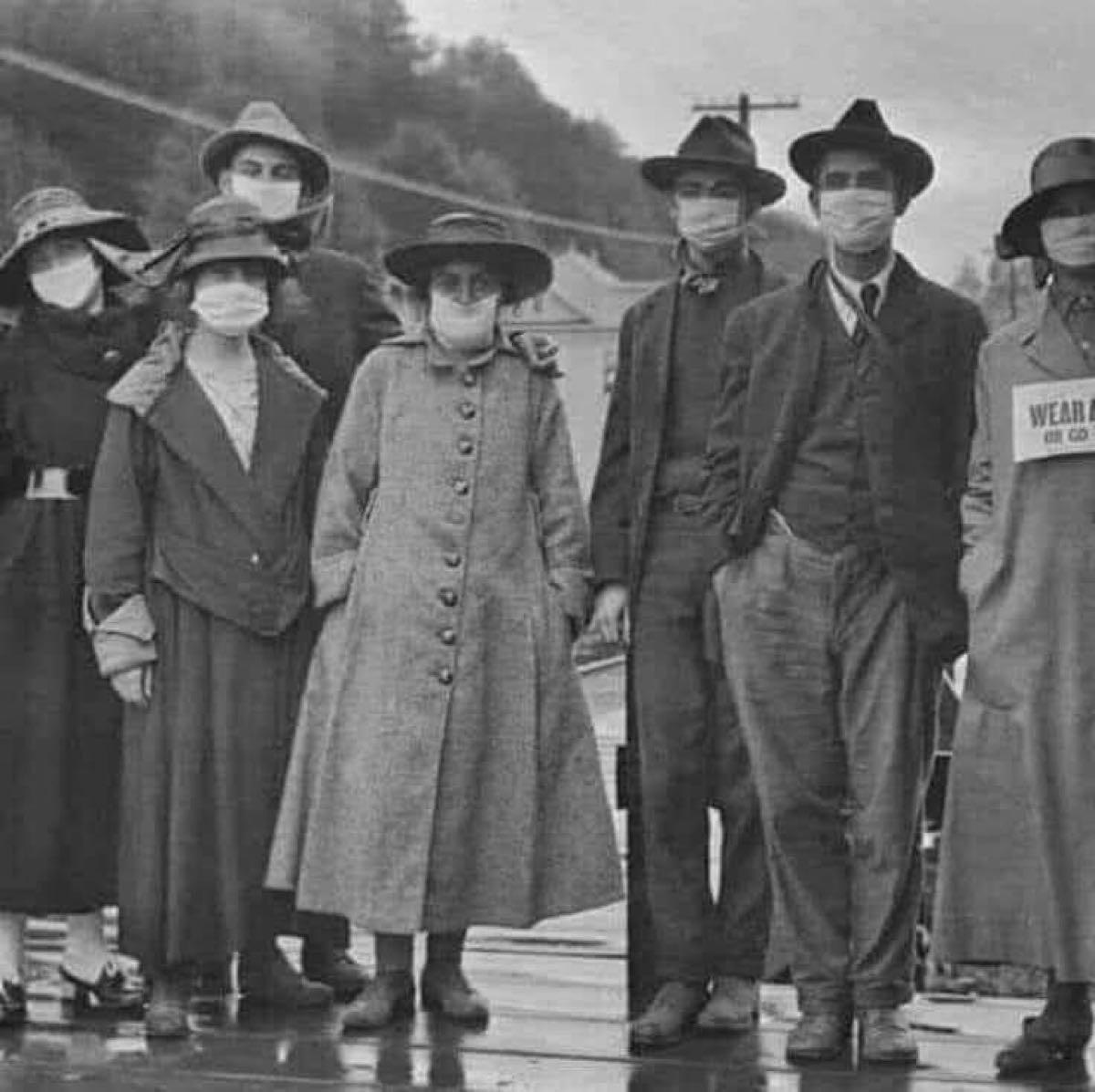
Soon after a global pandemic, the Spanish Flu, appears, killing 50 million people. And you’re alive and 20 years old.
When you’re 29 you survive the global economic crisis that started with the collapse of the New York Stock Exchange, causing inflation, unemployment and famine.
When you’re 33 years old the nazis come to power.
When you’re 39, World War II begins and ends when you’re 45 years old with a 60 million dead. In the Holocaust 6 million Jews die.
When you’re 52, the Korean War begins.
When you’re 64, the Vietnam War begins and ends when you’re 75.
A child born in 1985 thinks his grandparents have no idea how difficult life is, but they have survived several wars and catastrophes. Today we have all the comforts in a new world, amid a new pandemic. But we complain because we need to wear masks. We complain because we must stay confined to our homes where we have food, electricity, running water, wifi, even Netflix! None of that existed back in the day. But humanity survived those circumstances and never lost their joy of living. A small change in our perspective can generate miracles.
We should be thankful that we are alive. We should do everything we need to do to protect and help each other.
Re-Read that last line again and AGAIN!
 Coast Contact