Flags, fireworks, and barbeques are in order.
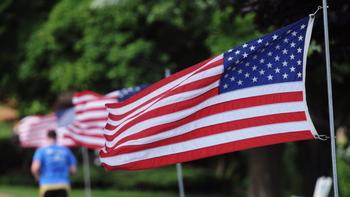
Flags, fireworks, and barbeques are in order.
I just finished watching this one hour program on PBS. It is worth your time. The message he offers is clear. I am sorry to write that Donald Trump is showing many of the traits of Hitler and Mussolini. Those two dictators gained control in democratic republics.
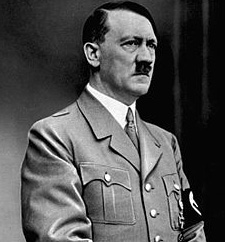
https://www.pbs.org/video/the-story-of-fascism-in-europe-pthanf/

This photo was on my computer when I restarted the processor.
The North Shore on Oahu is a great place for photographers to capture vivid images of the Pacific in motion, as the beach’s legendary monster waves rise up before breaking on the beach. This long-exposure photograph, shot early in the morning, shows off the power and motion of the water as it rises to form a curled wave. These waves make the North Shore one of Hawaii’s prime surfing destinations. When his ship, the HMS Discovery, was navigating the South Pacific in 1778, British explorer Captain James Cook noted the locals out in the waves riding on boards. Surfboards date back to at least 500 CE and possibly much further back in history.
On this fourth of July:
“ASK NOT WHAT YOUR COUNTRY CAN DO FOR YOU – ASK WHAT YOU CAN DO FOR YOUR COUNTRY”
Who said those words?
Most Americans know three of them by heart. Scant phrases which, though spoken in the most ritualistic and formal of settings, commonly define an age, and a speaker. “With malice toward none” Lincoln said in his second inaugural address, and Franklin D. Roosevelt, “Nothing to fear but fear itself” in his first. John F. Kennedy, whose centenary is celebrated this month, uttered the third such phrase at his only inauguration and it is, in popular memory, recalled the most simply: “Ask not.” Of course, that is not the whole of the quotation, or the whole story, which is told here…
The seventeen most inspiring words in 20th century American history were spoken by John F. Kennedy, around mid-day, on January 20, 1961, in Washington, D.C. The occasion was his Presidential Inauguration, and came as he was concluding his Inaugural Address. Kennedy, the first President born in the 20th century, and 27 years younger than his predecessor, Dwight D. Eisenhower, had just declared that the torch had been passed to a new generation of Americans – “born in this century, tempered by war, disciplined by a hard and bitter peace, proud of our ancient heritage” – and pledged to “pay any price, bear any burden, meet any hardship, support any friend, oppose any foe, in order to assure the survival and the success of liberty.” Then he spoke the seventeen words –
And so, my fellow Americans: Ask not what your country can do for you – ask what you can do for your country.
Those words, when first heard over a half-century ago, were positively electrifying. No president had ever challenged citizens, in peacetime, to sacrifice or commit to a larger vision. With that single sentence, Kennedy inspired people to new possibilities. He raised their expectations of themselves, and of their nation. In response, some joined the Peace Corps, others the Green Berets; thousands flocked to Washington to be part of the “New Frontier.” Students, thinking ahead to government service, went to law school or into programs with social benefit. All across the country, Kennedy’s words changed lives. “It was a special time,” a Senator remembered years later. “Lord, I’ve never had such a feeling before or since then. It was marvelous; without living it, you can’t express it. It gave the country a lift; it gave the world a lift. People cried in the dusty streets of Africa when he died.” All because of, really, seventeen simple words of inspiration.
My favorite words: “Give me liberty or give me death” and “Don’t tread on me” are my reasons for being an American.
Has Donald Trump or the previous recent presidents lived up to the JFK challenge? Sadly the answer is NO!

Memorial Day flag display at Pepperdine College in Malibu, California
In 1866, Henry Welles of Waterloo, New York, suggested that the town’s shops should close May 5 to commemorate the soldiers who had died during the Civil War. Two years later in Waterloo, Gen. John Logan issued a declaration that Decoration Day should be observed nationwide. The declaration said that May 30 would be designated as a day to decorate the graves of fallen soldiers.
In 1882, the name of the holiday was changed from Decoration Day to Memorial Day. After World War I, the holiday was expanded to remember soldiers from all American Wars.
In 1971, President Richard Nixon made Memorial Day a national holiday to be celebrated on the last Monday in May.
The cancellation of disarmament negotiation with North Korea should not come as a surprise to anyone. Like the Peanuts cartoon where Lucy pulls the ball away just as Charlie Brown is running to kick it so has North Korea pulled away from completing an agreement to end its nuclear/ballistic missile program. North Korea has pulled away from every agreement.
Here is a an abbreviated list of the previous failed efforts as reported on a CNN web site.
1985
North Korea signs the Nuclear Non-Proliferation Treaty (NPT).
1994
North Korea and the United States sign an agreement. North Korea pledges to freeze and eventually dismantle its old, graphite-moderated nuclear reactors in exchange for international aid to build two new light-water nuclear reactors.
2002
October – The Bush Administration reveals that North Korea has admitted operating a secret nuclear weapons program in violation of the 1994 agreement.
2003
January 10 – North Korea withdraws from the NPT.
2005
North Korea tentatively agrees to give up its entire nuclear program, including weapons. In exchange, the United States, China, Japan, Russia and South Korea say they will provide energy assistance to North Korea, as well as promote economic cooperation.
2007
February 13 – North Korea agrees to close its main nuclear reactor in exchange for an aid package worth $400 million.
2008
December – Six-party talks are held in Beijing. The talks break down over North Korea’s refusal to allow international inspectors unfettered access to suspected nuclear sites.
Donald Trump did the right thing in cancelling a Singapore summit.
The year is 2058. America’s greatest foreign relations challenge in the 21st century, North Korea’s desire to obtain a nuclear weaponized ICBM that can reach the United States has been stopped thanks to American and Chinese negotiators. The real threat has become nature. Rising sea levels and a warming climate has resulted in the United States becoming a super advocate for controlling all things that can further harm the environment.
Those that questioned the theory that climate change is real and doubted the effects that will result have largely become silent. They have become as rare as those who claim the world is flat.
Former Vice President Al Gore (deceased in 2036) is remembered as the man who first rang the warning bell about global warming. While his dates and impact were incorrect, his prediction that the world would be experiencing major changes thanks to global warming were correct.
There is now a 6 meter (20 foot) wall at the beach around much of southern Florida. Coastal plains have become part of the sea everywhere that is not protect by a sea wall.
Back in 2017 there were three successive years of Houston, Texas flooding that were called once in 500 years or once in a thousand year events. Even those who grew up there were trying to decide whether it was worth the fight to live in that flood plain. Most people have abandoned that city along with those who have left New Orleans.
Phoenix, Arizona summer temperatures now reach 120 Fahrenheit (49C) or more on the very hottest days. The population has grown because there is now an abundance of water and farming has become a significant industry in that state.
Los Angeles still has a Mediterranean climate along the coast but inland high temperatures now frequently reach 115 Fahrenheit (46C) in the summer. The highest temperature in the San Fernando Valley in 2057 was 120 Fahrenheit and the National Weather Service says more days close to that record are anticipated in the future. The humidity is now more similar to the east coast of the United States.
Solar panels are everywhere. Without them the cost of air conditioning would be too expensive for most families. Even now in 2058 many families have moved into communes to afford living in southern California.
Associated Press Report:
Robert Castello literally wears his Southern pride. The visor, suspenders and ring he donned Thursday were all emblazoned with the familiar design of the rebel battle flag.
Castello, whose Dixie General Store sells Confederate-themed hats, shirts, stickers and signs in rural eastern Alabama, said he doesn’t have any use for overtly racist groups like the Klan. Continue reading “Pride in Southern Heritage Does Not Require the Confederate Flag”
I have visited Oregon at least three times. All were wonderful experiences. From the Oregon Caves to the Columbia River it is all beautiful scenery. I never gave a thought about their racial make up or their apparent hate history. I was upset over the stabbing in Portland as were most people. Even more upsetting is Oregon’s History Of White Supremacy. It was reported on my local NPR radio station.
Portland Train Murders Highlight Oregon’s History Of White Supremacy
4:40 PM ET
Heard on All Things Considered
NPR’s Ari Shapiro talks with Randy Blazak, chair of the Oregon Coalition Against Hate Crime, about the state of white supremacy in the Portland area and the state of Oregon.
ARI SHAPIRO, HOST:
We now turn to the chair of the Oregon Coalition Against Hate Crime, Randy Blazak. He teaches criminology at the University of Oregon and has been tracking the white supremacist movement in the state for more than 20 years. Welcome.
RANDY BLAZAK: Hello.
SHAPIRO: While Portland has a reputation for being progressive, it is also the whitest big city in America. Tell us about Oregon’s history with racist policies.
BLAZAK: Well, we’ve kind of got a long history that goes back to the founding of the state. I mean the Oregon Trail was – the Land Donation Act was for white settlers only. The state was founded in 1859 as a white-only state, and then that was on the books until 1922. Portland and Oregon had the largest Klan west of the Rockies, the largest per capita actually in the whole country.
SHAPIRO: That’s amazing.
BLAZAK: So…
SHAPIRO: Oregon had the largest per capita Klan membership in the entire country.
BLAZAK: That’s right. It was very active. They elected a governor, Governor Pierce, who went to work outlawing Catholic churches as one of his first duties, which was soon overturned by the Supreme Court. But it was a very active Klan state. And it’s a part of the explanation about why Portland is as white as it is in the year 2017 – is this long racial history the state has.
SHAPIRO: Has Oregon ever taken steps to address or undo legacies of its racist past?
BLAZAK: Sure. I mean it’s had to rewrite some parts of the Constitution that had words like colored people and mulattoes in the constitution. That was only taken out about a decade ago. There has been an attempt to redress or at least acknowledged some of its history, but it’s kind of woven into it up into the modern-day issues around gentrification where we see minority people being pushed out of neighborhoods to make room for incoming moneyed whites. I mean it’s sort of this long story that’s been told that has many chapters. And this unfortunately is just the latest chapter in our history.
SHAPIRO: Well, what do you see in today’s chapter that’s different from what we’ve seen in the past?
BLAZAK: You know, we’ve certainly had racial violence, including the murder of an Ethiopian immigrant by skinheads in 1988 in Portland. But this version is…
SHAPIRO: I remember that. I was in school at the time in Portland.
BLAZAK: Yes, Mulugeta Seraw – I mean many people still remember that incident that – you know, this brings about the role of the Internet, the role of online radicalization and the way that this subculture has sort of morphed into this more invisible world. I mean there used to be physical places that you would go to Klan rallies or to skinhead meetings. And now it kind of takes place online, and people express those views more openly. And so it’s a new version of an old phenomenon. But in a way, it’s more insidious because it sort of exists in the ether and not in a physical place.
SHAPIRO: We just heard about the debate in the city over whether this so-called Trump free speech rally with alt-right groups should be allowed to go forward. Are you concerned that there could be more violence if these happen?
BLAZAK: There’s a lot of tension that’s been building. It’s been building in this city for a long time. I mean Portland became known as skinhead city in the 1990s because of, like, rival factions of racist skinheads and anti-racist skinheads going at it. And so we’re seeing a new version of this. But it’s been kind of magnified by the election politics and the rhetoric of the alt-right and the ability to kind of rally the troops fairly quickly over the Internet. And I think the city is sort of bracing itself for something that might turn quite ugly.
SHAPIRO: Do you go into the chat rooms and other places where these communities gather online? And…
BLAZAK: Yeah.
SHAPIRO: Can you describe how they’ve been reacting to this stabbing?
BLAZAK: You know, both sides have been talking about this incident. There are members of people on the right-wing side of the spectrum that would like to see more of this violence and have vilified the victims as sort of the people who prop up the status quo and defend multiculturalism and the Islamification of America, as they’ve called it.
The people on the left side are concerned that the police are overly protective of what they’re calling fascists in the streets of Portland and are not doing enough to shut down these folks who of course have a First Amendment right but also are causing concern around the issue of agitating more right-wing violence. So it’s really – it depends on where you’re standing what the perspective on the city’s role on this issue is.
SHAPIRO: That’s Randy Blazak, chair of the Oregon Coalition Against Hate Crime. Thanks for joining us.
BLAZAK: My pleasure.
(SOUNDBITE OF THE WEAKERTHANS SONG, “ELEGY FOR GUMP WORSLEY”)
Copyright © 2017 NPR. All rights reserved. Visit our website terms of use and permissions pages at www.npr.org for further information.
NPR transcripts are created on a rush deadline by Verb8tm, Inc., an NPR contractor, and produced using a proprietary transcription process developed with NPR. This text may not be in its final form and may be updated or revised in the future. Accuracy and availability may vary. The authoritative record of NPR’s programming is the audio record.
 Coast Contact