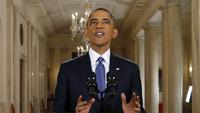
Sadly both the president and the congress have decided that the next two years will not be about passing laws that will improve the quality of life for most Americans.
President Obama started the ball rolling with his threat to veto the Keystone XL pipeline. His contention is that there will be a consequential impact on the environment and in addition only 35 jobs will be created. He is talking about the additional jobs that will be added to already functioning refineries. He overlooks the hundreds of construction jobs that will be created in building the pipeline. He overlooks the fact that the refined oil could be used in the United States if needed. He overlooks the fact that oil sands will be transported by rail tanks cars and trucks.
Just as the Republicans are gaining support for the pipeline they distract everyone by attempting to pass an anti-abortion law that would prohibit government subsidized abortions if the woman is more than 20 weeks pregnant and had not reported being raped immediately after it had occurred. It was a large block of moderate female Republican congressional members that refused to vote in favor of the law. It was another prefect example of men deciding laws regulating women.
The other priority for the GOP is the stop Obama’s decision to not deport illegal aliens who have had no brushes with the law. Politico’s column GOP seeking Plan B on immigration suggests a few avenues the Republicans might take but none address the question surrounding the 12 million illegal aliens now in the United States.
Google “new GOP legislation” and all you find is discussion about the failed abortion law and efforts to stop Obama’s executive orders pertaining to illegal aliens.
So where is the unity among Republicans to prove to America’s voters that they can do more than say “No”? Senator Ted Cruz’s “GOP will fight Obamacare until the end of time” position is the best example of Republican philosophy.
Where are the unifiers in the Republican Party? Neither Speaker John Boehner nor Majority Leader Mitch McConnell have sufficient respect to lead the party. Republican National Committee Chairman Reince Priebus on Wednesday criticized President Obama’s State of the Union address as “aloof” and “detached from reality.” But Priebus has not been a unifying force in his party.
President Obama told us about his dreams in the State of the Union address. That will be part of his legacy. The Republican legacy for the next two years will be “We said no to Obama.”
For a president who has lost control of both houses of Congress, Barack Obama seems to be oblivious to his situation. That may be a good thing. After all he will hold office for another two years. He wants to be remembered for more than being the first Black president. His will defend his signature legislation, the Affordable Care Act, forever. Beyond that he wants to be remembered as a leader who cared about all the people.
His speech gave comfort to every group that makes up the Democratic Party. He made references to illegal immigrants, the LGBT community, the conservationists, those wanting more foreign trade, etc. It’s what good speech writers do. They recognize everyone in the hope of creating unity.
The president intentionally minmized every troubling foreign affairs issue from Ukraine to Iran and not word was spoken about the economic divide that separates the very wealthy from the rest of American society. A smart decision since that would only enflame his opponents.
So naturally his State of the Union address was a litany of all the legislation he wishes to sign into law in the next two years. Of course most of it won’t be approved by the congress but at least he had the opportunity to state his wishes. Those wishes are probably the basis for the next Democratic Party platform that will be part of the 2016 election.
Sadly opposition to Obama comes from both political parties. Our system of government has survived these kinds of divides in the past. As a nation the country will continue its dominant position in world affairs.
It continues to astonish me that the leading candidates for president, according to recent polls, are a group of people who were rejected for the job either four or eight years ago. Finally one commentator has had the courage to state the obvious. Eugene Robinson wrote in the Washington Post that the race is devolving into a contest of re-treads. “In a nation of more than 310 million souls, we can do better.”
Robinson is so right. Mitt Romney is pitching for donors as Hillary Clinton seems to have the Democratic Party nomination secured without one primary election.
It is a contest of shopworn seniors who have more to say about what they have done than what they are likely to do. Of course they will try to tell us that they still have lots of new ideas. Romney will now be concerned about the 47% and Clinton will have fresh ideas to counter terrorism and enabling middle eastern country partners and their people. Are we to believe that Hillary Clinton, one of the leading advocates for toppling Muammar Gaddafi, has a new understanding of Middle East issues and really has any new ideas?
The problem is the political parties. The power structure in both parties defines the likely nominees. It seems our choices will be either Jeb Bush or Mitt Romney for the Republicans and Hillary Clinton for the Democrats. We will hold our noses as we go to the polls; knowing we could do better.
This presentation is worth watching or read the transcript below the Youtube video. I support her points. Unfortunately many do not. It is a mystery to me why so many people do not want a growing middle class. This does tie in to my commentary The Great economic Divide.
WASHINGTON, D.C. –(ENEWSPF)—January 7, 2015. Today, United States Senator Elizabeth Warren spoke at the AFL-CIO National Summit on Raising Wages. The text of Senator Warren’s remarks as prepared for delivery follows, and a PDF copy of her remarks is available here:
Good morning, and thank you MaryBe for the introduction, and for your work with the North Carolina AFL-CIO. Your efforts make a real difference for our families.
I want to start by thanking Rich Trumka and Damon Silvers for your leadership on economic issues, for your good counsel, and, for a long time now, your friendship. I also want to give special thanks to my good friends from the Massachusetts AFL-CIO who are here today, Steve Tolman and Lou Mandarini.
I love being with my labor friends, and I’m especially glad to join you today for the AFL’s first-ever National Summit on Wages. You follow in the best tradition of the American labor movement for more than a century-always fighting for working people, both union and non-union. Today you’ve spotlighted an economic issue that is central to understanding what’s happening to people all over this country.
I recently read an article in Politico called “Everything is Awesome.” The article detailed the good news about the economy: 5% GDP growth in the third quarter of 2014, unemployment under 6%, a new all-time high for the Dow, low inflation.(i)
Despite the headline, the author recognized that not everything is awesome, but his point has been repeated several times: On many different statistical measures, the economy has improved and is continuing to improve. I think the President and his team deserve credit for the steps they’ve taken to get us here. In particular, job growth is a big deal, and we celebrate it.
I’ve spent most of my career studying what’s happening to America’s middle class, and I know that these four widely-cited statistics give an important snapshot of the success of the overall economy. But the overall picture doesn’t tell us much about what’s happening at ground level to tens of millions of Americans. Despite these cheery numbers, America’s middle class is in deep trouble.
Think about it this way: The stock market is soaring, and that’s great if you have a pension or money in a mutual fund. But if you and your husband or wife are both working full time, with kids in school, and you are among the half or so of all Americans who don’t have any money in stocks,(ii) how does a booming stock market help you?
Corporate profits(iii) and GDP are up. But if you work at Walmart, and you are paid so little that you still need food stamps to put groceries on the table, what does more money in stockholders’ pockets and an uptick in GDP do for you?
Unemployment numbers are dropping. But if you’ve got a part-time job and still can’t find full-time work — or if you’ve just given up because you can’t find a good job to replace the one you had — you are counted as part of that drop in unemployment,(iv) but how much is your economic situation improving?
Inflation rates are still low. But if you are young and starting out life with tens of thousands of dollars in student loan debt locked into high interest rates by Congress, unable to find a good job or save to buy a house, how are you benefiting from low inflation?
A lot of broad national economic statistics say our economy is getting better, and it is true that the economy overall is recovering from the terrible crash of 2008. But there have been deep structural changes in this economy, changes that have gone on for more than thirty years, changes that have cut out hard-working, middle class families from sharing in this overall growth.
It wasn’t always this way.
Coming out of the Great Depression, America built a middle class unlike anything seen on earth. From the 1930s to the late 1970s, as GDP went up, wages went up pretty much across the board. In fact, 90% of all workers-everyone outside the top 10%-got about 70% of all the new income growth.(v) Sure, the richest 10% gobbled up more than their share-they got 30%. But overall, as the economic pie got bigger, pretty much everyone was getting a little more. In other words, as our country got richer, our families got richer. And as our families got richer, our country got richer. That was how this country built a great middle class.
But then things changed.
By 1980, wages had flattened out, while expenses kept going up. The squeeze was terrible. In the early 2000s, families were spending twice as much, adjusted for inflation, on mortgages as they had a generation earlier. They spent more on health insurance, and more to send their kids to college. Mom and dad both went to work, but that meant new expenses like childcare, higher taxes, and the costs of a second car. All over the country, people tightened their belts where they could, but it still hasn’t been enough to save them. Families have gone deep into debt to pay for college, to cover serious medical problems, or just to stay afloat a while longer.(vi) And today’s young adults may be the first generation in American history to end up, as a group, with less than their parents.(vii)
Remember how up until 1980, 90% of all people-middle class, working people, poor people-got about 70% of all the new income that was created in the economy and the top 10% took the rest? Since 1980, guess how much of the growth in income the 90% got? Nothing. None. Zero. In fact, it’s worse than that. The average family not in the top 10% makes less money than a generation ago.(viii) So who got the increase in income over the last 32 years? 100% of it went to the top ten percent. All of the new money earned in this economy over the past generation-all that growth in the GDP-went to the top.(ix) All of it.
That is a huge structural change. When I look at the data here – and this includes years of research I conducted myself – I see evidence everywhere about the pounding that working people are taking. Instead of building an economy for all Americans, for the past generation this country has grown an economy that works for some Americans. For tens of millions of working families who are the backbone of this country, this economy isn’t working. These families are working harder than ever, but they can’t get ahead. Opportunity is slipping away. Many feel like the game is rigged against them – and they are right. The game is rigged against them.
Since the 1980s, too many of the people running this country have followed one form or another of supply side – or trickle down – economic theory. Many in Washington still support it. When all the varnish is removed, trickle-down just means helping the biggest corporations and the richest people in this country, and claiming that those big corporations and rich people could be counted to create an economy that would work for everyone else.
Trickle-down was popular with big corporations and their lobbyists, but it never really made much sense. George Bush Sr. called it voodoo economics.(x) He was right, and let’s call it out for what it is: Trickle-down was nothing more than the politics of helping the rich-and-powerful get richer and more powerful, and it cut the legs out from under America’s middle class.
Trickle-down policies are pretty simple. First, fire the cops-not the cops on Main Street, but the cops on Wall Street. Pretty much the whole Republican Party – and, if we’re going to be honest, too many Democrats – talked about the evils of “big government” and called for deregulation. It sounded good, but it was really about tying the hands of regulators and turning loose big banks and giant international corporations to do whatever they wanted to do-turning them loose to rig the markets and reduce competition, to outsource more jobs, to load up on more risks and hide behind taxpayer guarantees, to sell more mortgages and credit cards that cheated people. In short, to do whatever juiced short term profits even if it came at the expense of working families.
Trickle down was also about cutting taxes for those at the top. Cut them when times are good, cut them when times are bad. And when that meant there was less money for road repairs, less money for medical research, and less money for schools and that our government would need to squeeze kids on student loans, then so be it. And look at the results: The top 10% got ALL the growth in income over the past 30 years-ALL of it-and the economy stopped working for everyone else.
The trickle-down experiment that began in the Reagan years failed America’s middle class. Sure, the rich are doing great. Giant corporations are doing great. Lobbyists are doing great. But we need an economy where everyone else who works hard gets a shot at doing great!
The world has changed beneath the feet of America’s working families. Powerful forces like globalization and technology are creating seismic shifts that are disrupting our economy, altering employment patterns, and putting new stresses on old structures. Those changes could create new opportunities-or they could sweep away the last vestiges of economic security for 90% of American workers. Those changes demand new and different economic policies from our federal government. But too many politicians have looked the other way. Instead of running government to expand opportunity for 90% of Americans and to shore up security in an increasingly uncertain world, instead of re-thinking economic policy to deal with tough new realities, for more than 30 years, Washington has far too often advanced policies that hammer America’s middle class even harder.
Look at the choices Washington has made, the choices that have left America’s middle class in a deep hole:
the choice to leash up the financial cops,
the choice in a recession to bail out the biggest banks with no strings attached while families suffered,
the choice to starve our schools and burden our kids with billions of dollars of student loan debt while cutting taxes for billionaires,
the choice to spend your tax dollars to subsidize Big Oil instead of putting that money into rebuilding our roads and bridges and power grids,
the choice to look the other way when employers quit paying overtime, reclassified workers as independent contractors and just plain old stole people’s wages,
the choice to sign trade pacts and tax deals that let subsidized manufacturers around the globe sell here in America while good American jobs get shipped overseas.
For more than thirty years, too many politicians in Washington have made deliberate choices that favored those with money and power. And the consequence is that instead of an economy that works well for everyone, America now has an economy that works well for about 10% of the people.
It wasn’t always this way, and it doesn’t have to be this way. We can make new choices – different choices – choices that put working people first, choices that aim toward a better future for our children, choices that reflect our deepest values as Americans.
One way to make change is to talk honestly and directly about work, about how we value the work that people do every day. We need to talk about what we believe:
We believe that no one should work full time and still live in poverty – and that means raising the minimum wage.
We believe workers have a right to come together, to bargain together and to rebuild America’s middle class.
We believe in enforcing labor laws, so that workers get overtime pay and pensions that are fully funded.
We believe in equal pay for equal work.
We believe that after a lifetime of work, people are entitled to retire with dignity, and that means protecting Social Security, Medicare, and pensions.
We also need a hard conversation about how we create jobs here in America. We need to talk about how to build a future. So let’s say what we believe:
We believe in making investments – in roads and bridges and power grids, in education, in research – investments that create good jobs in the short run and help us build new opportunities over the long run.
And we believe in paying for them-not with magical accounting scams that pretend to cut taxes and raise revenue, but with real, honest-to-goodness changes that make sure that we pay-and corporations pay-a fair share to build a future for all of us.
We believe in trade policies and tax codes that will strengthen our economy, raise our living standards, and create American jobs – and we will never give up on those three words: Made in America.
And one more point. If we’re ever going to un-rig the system, then we need to make some important political changes. And here’s where we start:
We know that democracy doesn’t work when congressmen and regulators bow down to Wall Street’s political power – and that means it’s time to break up the Wall Street banks and remind politicians that they don’t work for the big banks, they work for US!
Changes like this aren’t easy. But we know they are possible. We know they are possible because we have seen David beat Goliath before. We have seen lobbyists lose. We’ve seen it all through our history. We saw it when we created the new Consumer Financial Protection Bureau, when we passed health care reform. We saw it when President Obama took important steps to try and reform our immigration system through executive order just weeks ago. Change is difficult, but it is possible.
This is personal for me. When I was 12, my big brothers were all off in the military. My mother was 50 years old, a stay at home mom. My daddy had a heart attack, and it turned our little family upside down. The bills piled up. We lost the family station wagon, and we nearly lost our home. I remember the day my mother, scared to death and crying the whole time, pulled her best dress out of the closet, put on her high heels and walked to the Sears to get a minimum wage job. Unlike today, a minimum wage job back then paid enough to support a family of three. That minimum wage job saved our home-and saved our family.
My daddy ended up as a maintenance man, and my mom kept working at Sears. I made it through a commuter college that cost $50 a semester and I ended up in the United States Senate. Sure, I worked hard, but I grew up in an America that invested in kids like me, an America that built opportunities for kids to compete in a changing world, an America where a janitor’s kid could become a United States Senator. I believe in that America.
I believe in an America that builds opportunities. An America that ensures that all hardworking men and women earn good wages. An America that once again grows a strong, vibrant middle class.
I believe in that America, and I will fight for that America! And if we fight-side-by-side-I know we will build that America again.
It is sad to report that many news organizations refuse to print or post Charlie Hebdo cartoons. If everyone would do it then who would the haters attack? Congratulations to The Huffington Post. Someone there has the courage.
Known for its caricatures of the Prophet Muhammad, as well as critical depictions of Catholics, Jews and French politicians, the magazine regularly stirred controversy.
Charlie Hebdo gained notoriety in 2006 for its portrayal of a sobbing Muhammad, under the headline “Mahomet débordé par les intégristes” (“Muhammad overwhelmed by fundamentalists”). Within its pages, the magazine published 12 cartoons of the Prophet Muhammad, bringing unprecedented condemnation from the Muslim world. The French Council for the Muslim Faith eventually sued the weekly for the cartoon. The issue has since been considered the one which positioned Charlie Hebdo as a target for terrorist attacks.
Let’s not beat around. Barack Obama was wrong. There are two Americas. Not red states and blue states or racial divides of Black and White. The two Americas are 1) the rich and 2) everyone else.
This is the subject that should be discussed and debated in the next presidential election. Even before that date the subject of the declining size of the middle class and the growing numbers of poor should be discussed by every candidate in both political parties.
Mario Cuomo, the just deceased former governor of New York State, speaking at the 1984 Democratic convention in San Francisco told us the truth about America. Unfortunately the things he said are even truer today.
“While the press and politicos would thrill to the speech’s metaphors about the ‘Tale of Two Cities’ and wagon trains heading west, Cuomo himself would note years later that the part of the speech that ordinary people mentioned to him more than any other by far was the moving description of his family’s immigrant experience” 1 which matches a story that many immigrants to America can tell.
So here we sit at the beginning of 2015 with 30% of the unemployed still looking for work for more than half a year. Many people have been unemployed for years rather than months. Considering those that are “marginally attached to the work force” the unemployment rate is over 11%. These are numbers from the last (November 2014) Labor Department report.
Some are whining that half of the population pay no income taxes. Are they upset that their pay is so low or that the burden is too high for the nation’s wealthy population? That there is a population that receives special treatment for their dividend and interest earnings? The wealthy aretaxed at a lower rate than the family that works for their income. There are wealthy that pay no income tax because they own nothing but municipal bonds.
Will Jeb Bush, Hillary Clinton, or any of the other candidates discuss the great economic divide that haunts this nation? My guess is that this is a subject that won’t be discussed. The reason is quite simple. No one wants to alienate their backers who are mostly the very rich.
So what will they discuss and debate? Iran, Iraq, ISIS, Cuba, immigration, taxes, education and everything else you can imagine. There won’t be one word spoken about America’s economic divide.
1 Andrei Cherny, “The legacy of Mario Cuomo’s 1984 ‘Tale of Two Cities’ speech”, Yahoo News
George Orwell’s 1984 was a classic tale of a world where the government watched everyone all of the time. Televisions were everywhere and every one of them had a camera that spied on everyone no matter where they were. If that wasn’t horrible enough, the government redefined everything and required everyone to accept their definitions.
Thus green could be called blue and black could be called white. Junk yards could be called beautiful and torture could be called pleasure.
Could the story of 1984 happen in America? Most of you would say “No.” – Eric Snowden divulged the fact that our phone lines and e-mail contacts are being monitored by the CIA. – Cameras identified the Boston Marathon bombers within a few hours thanks to cameras mounted on the streets. – The Fort Hood massacre by Army Maj. Nidal Hasan has been called “work place violence” but not a terrorist attack. Interesting definition when you consider that just before the shooting began, many of the witnesses recounted, the gunman yelled “Allahu Akbar,” the Arabic exhortation meaning “God is great.” – Former Vice President Dick Cheney on this past Sunday’s Meet the Press was asked by moderator Chuck Todd how he defined torture: Well, torture, to me, Chuck, is an American citizen on a cell phone making a last call to his four young daughters shortly before he burns to death in the upper levels of the Trade Center in New York City on 9/11.
Todd followed up by asking whether rectal feeding was torture, and Cheney continued his distract-with-shiny-objects strategy. I’ve told you what meets the definition of torture. It’s what 19 guys armed with airline tickets and box cutters did to 3,000 Americans on 9/11.
Killing unarmed Black men is justifiable homicide. We have grand juries that confirm it!
The United States has a history of wanting to assure the world that we did something really bad and it won’t happen again. Other nations for the most part simply move on and say as little as possible about their previous misbehaviour. Turkey’s refusal to acknowledge the killing of millions of Armenians is the outstanding example. Germany is the one nation that stands out in trying to make amends for the Holocaust.
Look at the list of things we Americans champion that we once supported. In every instance America says “never again.”Today we lecture other nations about their behavior.
– Slavery: Pope Paul III forbade it in 1537. Great Britain abolished slavery in 1805.
– Massacre of indigenous people: Sand Creek Massacre in Colorado. The killing commenced on Nov. 29, 1864, when 700 members of the Colorado Territory Militia led by Col. John Chivington attacked a Native American encampment in southeastern Colorado, slaughtering between 150 and 200 Indians — mostly women, children and the elderly.
– Internment of people of Japanese descent in America during WWII.
– A Bomb use: The United States dropped it twice to end WWII. Justified or not, the United States does everything in its power to prevent other nations from obtaining the capability of building nuclear weapons.
– Torture of war prisoners: Abu Ghraib and Guantanamo and in other locations, prisons were places where there was extreme torture and mistreatment.
What all of these incidents have in common is the words “never again.” However, when the United States government believes it has “the right” to its actions all holds are bared. As a nation we panic. Ebola was not even close to becoming an epidemic in this nation. Still the public and the government behaved as if there was an issue of going shopping at your local market.
When the next event occurs, and it will, you can be sure that panic will bring out the worst in us. Since we choose to investigate and report our behavior, our enemies will use those reports to prove that the United States is a really bad country.
Senator Bernie Sanders is viewed by many as a communist or at the very least a socialist. Read his 12 initiatives below and tell me who would disagree with his ideas.
I am looking for a presidential candidate that will provide a set of ideas or goals that are achievable. Senator Bernie Sanders, the independent from Vermont who caucuses with the Democrats has offered his goals in an easy to understand declaration. I agree with his goals. Despite what others may call him, I identify him as a real progressive who wants to help the poor and middle live better lives. Both the Democrats and Republicans should co-opt these ideas.
Following is a copy of his 12 initiatives to help America’s middle class.
—
The American people must make a fundamental decision. Do we continue the 40-year decline of our middle class and the growing gap between the very rich and everyone else, or do we fight for a progressive economic agenda that creates jobs, raises wages, protects the environment and provides health care for all? Are we prepared to take on the enormous economic and political power of the billionaire class, or do we continue to slide into economic and political oligarchy? These are the most important questions of our time, and how we answer them will determine the future of our country. The long-term deterioration of the middle class, accelerated by the Wall Street crash of 2008, has not been pretty. Today, we have more wealth and income inequality than any major country on earth. We have one of the highest childhood poverty rates and we are the only country in the industrialized world which does not guarantee health care for all. We once led the world in terms of the percentage of our people who graduated college, but we are now in 12th place. Our infrastructure, once the envy of the world, is collapsing. Real unemployment today is not 5.8 percent, it is 11.5 percent if we include those who have given up looking for work or who are working part time when they want to work full time. Youth unemployment is 18.6 percent and African-American youth unemployment is 32.6 percent. Today, millions of Americans are working longer hours for lower wages. In inflation-adjusted dollars, the median male worker earned $783 less last year than he made 41 years ago. The median woman worker made $1,337 less last year than she earned in 2007. Since 1999, the median middle-class family has seen its income go down by almost $5,000 after adjusting for inflation, now earning less than it did 25 years ago. The American people must demand that Congress and the White House start protecting the interests of working families, not just wealthy campaign contributors. We need federal legislation to put the unemployed back to work, to raise wages and make certain that all Americans have the health care and education they need for healthy and productive lives. As Vermont’s senator, here are 12 initiatives that I will be fighting for which can restore America’s middle class.
1. Rebuilding Our Roads
We need a major investment to rebuild our crumbling infrastructure: roads, bridges, water systems, waste water plants, airports, railroads and schools. It has been estimated that the cost of the Bush-Cheney Iraq War, a war we should never have waged, will total $3 trillion by the time the last veteran receives needed care. A $1 trillion investment in infrastructure could create 13 million decent paying jobs and make this country more efficient and productive. We need to invest in infrastructure, not more war.
2. Reversing Climate Change
The United States must lead the world in reversing climate change and make certain that this planet is habitable for our children and grandchildren. We must transform our energy system away from fossil fuels and into energy efficiency and sustainable energies. Millions of homes and buildings need to be weatherized, our transportation system needs to be energy efficient and we need to greatly accelerate the progress we are already seeing in wind, solar, geothermal, biomass and other forms of sustainable energy. Transforming our energy system will not only protect the environment, it will create good paying jobs.
3. Creating Jobs
We need to develop new economic models to increase job creation and productivity. Instead of giving huge tax breaks to corporations which ship our jobs to China and other low-wage countries, we need to provide assistance to workers who want to purchase their own businesses by establishing worker-owned cooperatives. Study after study shows that when workers have an ownership stake in the businesses they work for, productivity goes up, absenteeism goes down and employees are much more satisfied with their jobs.
4. Protecting Unions
Union workers who are able to collectively bargain for higher wages and benefits earn substantially more than non-union workers. Today, corporate opposition to union organizing makes it extremely difficult for workers to join a union. We need legislation which makes it clear that when a majority of workers sign cards in support of a union, they can form a union.
5. Raising the Wage
The current federal minimum wage of $7.25 an hour is a starvation wage. We need to raise the minimum wage to a living wage. No one in this country who works 40 hours a week should live in poverty.
6. Pay Equity
Women workers today earn 78 percent of what their male counterparts make. We need pay equity in our country — equal pay for equal work.
7. Making Trade Work for Workers
Since 2001 we have lost more than 60,000 factories in this country, and more than 4.9 million decent-paying manufacturing jobs. We must end our disastrous trade policies (NAFTA, CAFTA, PNTR with China, etc.) which enable corporate America to shut down plants in this country and move to China and other low-wage countries. We need to end the race to the bottom and develop trade policies which demand that American corporations create jobs here, and not abroad.
8. Cutting College Costs
In today’s highly competitive global economy, millions of Americans are unable to afford the higher education they need in order to get good-paying jobs. Further, with both parents now often at work, most working-class families can’t locate the high-quality and affordable child care they need for their kids. Quality education in America, from child care to higher education, must be affordable for all. Without a high-quality and affordable educational system, we will be unable to compete globally and our standard of living will continue to decline.
9. Breaking Up Big Banks
The function of banking is to facilitate the flow of capital into productive and job-creating activities. Financial institutions cannot be an island unto themselves, standing as huge profit centers outside of the real economy. Today, six huge Wall Street financial institutions have assets equivalent to 61 percent of our gross domestic product – over $9.8 trillion. These institutions underwrite more than half the mortgages in this country and more than two-thirds of the credit cards. The greed, recklessness and illegal behavior of major Wall Street firms plunged this country into the worst financial crisis since the 1930s. They are too powerful to be reformed. They must be broken up.
10. Bringing Health Care to All
The United States must join the rest of the industrialized world and recognize that health care is a right of all, and not a privilege. Despite the fact that more than 40 million Americans have no health insurance, we spend almost twice as much per capita on health care as any other nation. We need to establish a Medicare-for-all, single-payer system.
11. Ending Poverty
Millions of seniors live in poverty and we have the highest rate of childhood poverty of any major country. We must strengthen the social safety net, not weaken it. Instead of cutting Social Security, Medicare, Medicaid and nutrition programs, we should be expanding these programs.
12. Stopping Tax Dodging Corporations
At a time of massive wealth and income inequality, we need a progressive tax system in this country which is based on ability to pay. It is not acceptable that major profitable corporations have paid nothing in federal income taxes, and that corporate CEOs in this country often enjoy an effective tax rate which is lower than their secretaries. It is absurd that we lose over $100 billion a year in revenue because corporations and the wealthy stash their cash in offshore tax havens around the world. The time is long overdue for real tax reform.
As has been said by so many other people; we are all immigrants except American Indians.
There is a difference between President Obama’s granting of legal status to the undocumented and the amnesties of the past. The president’s executive action is only effective as long as he is president. He has the authority to reduce the government’s pursuit of illegal aliens. That is what he is doing.
His reason? His legacy. He obviously sees his action as a progressive solution to a problem that has existed since 1986 when President Reagan did sign an amnesty law passed by Congress.
The 5 million or so people who might be effected by Obama’s executive order are aliens who have held jobs and have families here for more than five years. We allowed these people to obtain jobs. We rarely punished employers who are fully aware that they have been hiring undocumented aliens. We did these things because those illegal aliens took jobs that most Americans won’t. All this because American businesses would not pay wages that most Americans will accept. Construction workers, farm laborers, and other blue collar jobs are dirty, dangerous, or in some other way are not acceptable to Americans. Illegal aliens are filling those jobs.
The GOP continues to be the party of NO. They have objected to every proposal made by Obama. With no ideas of their own the Republicans will provide the grid lock that has existed for the past two years.
For the sake of the nation the Republicans in the House of Representatives should approve the Senate passed immigration bill.