The Price of Politics

The following Letter to the editor in the Los Angeles Times on June 11, 2010 bears re-printing.  Obviously I couldn’t agree more. 

Re “Whitman and Fiorina roll to wins,” June 9

That former executives Meg Whitman and Carly Fiorina won important primaries serves as an example that the United States has the best elections money can buy.

Both women threw millions of their own money into their campaigns, seeking to buy their way into office.

My state had clean elections to level the playing field until it was halted by the Supreme Court, as a result of a Republican challenge. Politicians should be elected because they’re the best person for the job, not because they’ve got the most money. Elections in California and elsewhere are held hostage to the almighty dollar. The real losers are the American people.

Debra White

Tempe, Ariz.

Meg Whitman reportedly spent $80 million dollars to win.  $70 million dollars was her money.  Carly Fiorina reportedly spent $5 million dollars of her own money.

A voters’ guide to California’s 5 ballot measures

The unvarnished truth about the propositions on Tuesday’s ballot.


By George Skelton, Capitol Journal in the Los Angeles Times

June 3, 2010

From Sacramento —

It’s time again for some head-scratching and eye-glazing.

There are five propositions on Tuesday’s state ballot. And they run the gamut from a no-brainer to some efforts at Sacramento reform to a special-interest scam.

Here’s my voters’ guide, untainted — unlike those slick campaign mailers — by payoffs from politicians and predators.

Taking the measures in numerical order:

*Prop. 13 is only a distant, calm cousin of its namesake, the revolutionary property tax-cutter born 32 years ago.

This measure would allow earthquake retrofitting of all types of buildings without their owners ultimately being assessed higher property taxes because of the improvements. The structures would be reassessed only when sold.

This would create jobs and could save lives. What’s not to like?

*Prop. 14 would significantly change state elections by creating an open, more voter-friendly primary, called a “top-two.”

There would be only one ballot, open to all candidates and voters. The top two vote-getters, regardless of party, would advance to the general election, similar to the way local officials are elected in California. No party primaries. No party nominations. But candidates could list their party affiliations.

The goal is to force candidates to appeal to a wider range of voters than just the ideologues in their own party. Hopefully some pragmatic moderates would be elected, particularly to the Legislature, which is now polarized by partisanship. At the least, primary voters would be given a wider selection of candidates.

Power would be taken from the party pooh-bahs and given to the public. That’s one reason they fear it.

Politicians also complain that in some heavily Democratic or Republican districts, they might be required to run against a fellow party member in November, meaning real competition. That may be inconvenient for them. But it’s a better deal for voters, providing them with a more meaningful choice of candidates.

The only reason to vote “no” on Prop. 14 is if you’re satisfied with what has been happening in Sacramento. If you’d like to shake things up and try something different, vote “yes.”

*Prop. 15 would create a pilot program for public financing of state campaigns. It would apply only to candidates for secretary of state and just for the 2014 and 2018 elections.

The financing really wouldn’t be public. It would be unfair — tapping only lobbyists, their firms and the interests they represent. They’re easy targets.

But the most important element of this measure is not the pilot project. It’s repeal of the law that bans public financing of state candidates. The ban also applies to counties and most cities.

This measure would authorize the Legislature and the governor to enact public financing without further voter approval. Same with boards of supervisors and city councils.

The only way to rid the Capitol of special-interest dominance is for the public to finance the politicians’ campaigns. When the public doesn’t buy the politicians, the interests do.

This measure is a small, hesitant step along a path worth following.

*Prop. 16 is a Pacific Gas & Electric Co. scam. Pure and simple.

Its purpose is to lock PG&E customers into the utility’s grasp without any realistic opportunity of ever escaping to an electricity provider with cheaper rates. The San Francisco-based utility is trying to assure itself a monopoly on current Northern and Central California ratepayers.

This measure erects a practically impenetrable barrier for local governments or public utilities to start up or expand electric service, or contract with a provider other than a private utility.

It does this by requiring a two-thirds vote of the electorate. PG&E’s advertising is disingenuous because the utility equates its proposed two-thirds requirement with what’s needed for most local tax increases.

But Prop. 16 has nothing to do with taxes. We’re talking about ratepayers who most likely are being gouged for more money than they’d be paying a public utility for the same or better service.

Anyway, people already have the right to vote whether they want to be served by a public utility. But that’s not good enough for PG&E, because only a majority vote currently is required for approval.

This proposition would apply to the customers of any private utility, such as Southern California Edison or San Diego Gas & Electric. But only PG&E is paying the campaign freight, nearly $50 million.

There are many opponents — public utilities, local governments, irrigation districts, farmers, developers — but there’s very little opposition money. Public entities are prohibited from spending money on political campaigns. And that’s why they’d never be able to muster a two-thirds public vote to escape PG&E’s clutches.

This insidious measure is the epitome of what ails California’s initiative system.

*Prop. 17 is another special-interest offering.

The bankroller, Mercury Insurance Group, is trying to change auto insurance law to increase its market share. It wants to steal customers from other insurers by allowing motorists to bring along their continuous-coverage discounts.

Mercury claims most drivers would get reduced premiums. Opponents contend premiums actually would rise because rates would go up for the previously uninsured.

It’s much too complicated for an average voter who isn’t in the insurance biz. It’s one of those issues best left to elected representatives.

I’m inclined to agree with opponent Harvey Rosenfield, founder of Consumer Watchdog, who says: “When was the last time an insurance company spent $13 million to save you money? The answer is never.”

In fact, Mercury has spent $14.6 million to promote the measure.

Mark me down as suspicious.

george.skelton@latimes.com

Steps to Solve the Immigration Problem

NBC is devoting a significant part of today’s programming to the immigration issue.  Doug McIntyre is a columnist in the Los Angeles Daily News.  This column appeared on May 22, 2010 on the front page.  I agree with most of what is written here.  This well written article deserves everyone’s attention.

The debate over immigration has degenerated into idiocy, with dueling boycotts and pickets outside basketball games. When Phil Jackson becomes Hitler it’s time to pull the plug on the stupidity and solve the problem.

Extremists demand either open borders or mass deportations. Tragically, our cowardly or pandering leaders have allowed the extremists to set the tenor of the debate by ducking the issue for decades. Here are the 10 points I believe would actually solve the problem:

One: Build a fence. Not a flimsy chain-link job we all hopped as kids, but a 1200-mile, Gulf-to-Pacific double fence with a road down the middle patrolled by ICE agents.

A physical barrier is essential. You can’t reform it if you don’t control it.

Two: It’s time for a tamper-proof national ID card. One third of illegal immigrants come here through our airports. They’re students, tourists and guest workers who simply vanish when their visas expire. Like it or not, we’re all going to have to “show our papers.”

Three: Sanctuary city laws have to go. Local law can’t undermine Federal law. Special Order 40 should be nullified.

Four: Employers who knowingly hire illegal workers should be jailed. A few CEOs doing the perp-walk will send a powerful message – we respect and protect the value of labor.

Five: Eliminate birth right citizenship. It’s hard to imagine the authors of the 14th amendment ever intended it to reward law-breakers by creating a loophole for anchor babies.

Six: Once the Federal Government has demonstrated actual control of our borders, we need a top to bottom reform of the legal path to citizenship. It shouldn’t take years and cost many thousands to come here. We also need to be picky about who we let in – for both security reasons and for the economic health of the country. Talent and skill should be a priority.

Seven: Children who were carried here by their parents, often as infants, should be allowed to go as far in life as their ability and ambition can take them. Children shouldn’t suffer for the actions of their parents.

Eight: Create a guest worker program that’s enforceable – that means a way to verify a worker actually leaves the country at the end of his or her contract.

Nine: Immigrants have to make a commitment to be American. You are not a traitor to your race when you embrace the land you have voluntarily entered – a country that takes you in, protects your rights and offers boundless opportunities. A little gratitude goes a long way.

Ten: Only after the first nine steps have been taken should we grant amnesty. Allowing illegal immigrants to remain in the country under some kind of sub-citizen designation would create second-class citizenship. We all have to be in this together.

Doug McIntyre’s column appears in the Los Angeles Daily News on Wednesdays and Sundays. You can reach him at dncolumnist@dailynews.com.

Rand Paul and Patrick Henry, “Give Me Liberty or Give Me Death!”

Give Me Liberty Or Give Me Death were the last words of a speech given by Patrick Henry, March 23, 1775 to a Virginia convention.  This one famous speech gave Patrick Henry a place in history books but he was never heard again.

Rand Paul has performed a service for all Americans.  He has defined the Tea Party position on a multitude of issues.  That puts him on the fringe of the political spectrum.  Everyone will find some views of his as correct.  He seems to have issues with the Civil Rights Act, the Fair Housing Act, and President Barack Obama’s handling of the Gulf oil spill Friday as anti-business and sounding “really un-American.” Rand Paul just wants to re-make America.  (Update: reported late on CBS radio news that he doesn’t want to share his views on Meet the Press.)  He is a Libertarian.

I found this appropriate Los Angeles Times editorial page comic commentary.

The reason that the Libertarian Party has not been successful is they hold views that most people find objectionable.  Everyone will find something in his views that are acceptable.  Just read this list of libertarian positions.

Fiscal Policy: Very right-libertarian. The Libertarian Party opposes taxation in pretty much all forms, and deals with the revenue loss by opposing entitlement programs in pretty much all forms. This means that people keep more of what they earn, but it also means that there is no social safety net. And ambitious new proposals–such as universal pre-kindergarten and universal health care–are obviously not compatible with this objective.

Corporations: Eliminate all federal subsidies to private corporations, as well as all antitrust laws.

Public Services: Eliminate the Postal Service. Transfer all government services, from public schools to landfills, to private ownership.

Property Rights: Would restrict public domain to immediate public use, and sell or give away most public property to private owners.

Criminal Justice: Would eliminate all antidrug laws and legalize prostitution. Would end random police roadblocks.

Free Speech: Would abolish the FCC and allow private ownership of broadcast frequencies. Opposes all restriction of free speech, including free speech restricted in the name of national security.

Church and State: Calls for reduced IRS regulation and monitoring of tax-exempt churches.

Second Amendment: Strongly opposes all gun control, as well as regulation of alternative weapon technologies (mace, Tasers, and so forth).

The Draft: Calls for the abolition of the Selective Service System and amnesty for any citizen who has ever resisted the draft.

Reproductive Rights: Pro-choice, but opposes all federal funding of abortion and most federal entitlements for women who choose to carry their pregnancies to term, including the child tax credit. Opposes involuntary or fraudulent sterilization.

LGBT Rights: Opposes “don’t ask, don’t tell.” Believes that marriage is a private contract, and should yield no government benefits regardless of the gender of the partners.

Immigrants’ Rights: Argues that borders should be open but surveilled–everyone who does not pose a threat to public health or national security should be allowed to enter the country legally. Would eliminate all federal benefits to undocumented immigrants.

Jobs, Jobs, Jobs, Jobs

Just two months ago (March 22) Republicans, especially talk radio and cable TV commentators, were banging the drum calling for repeal of the new health care plan.  It seemed that they had their cause for the November election.  As we move away from the passage of health care the focus has changed.  No wonder.  We have had the scare of the Times Square bomber, the BP oil spill, and the Greek financial crises to occupy our time along with a few other unusual occurrences.

Predicting the outcome of the November congressional elections would not be a worthwhile endeavor.  Yet, I must point out that there has been a lack of focus on the state of this economy.  The words “jobs, jobs, jobs” rings in my ears.  “It’s the economy, stupid” was a phrase in American politics widely used during Bill Clinton’s successful 1992 presidential campaign against President George H. W. Bush.  The words were coined by Clinton campaign strategist James Carville refers to the notion that Clinton was a better choice because Bush had not adequately addressed the economy, which had recently undergone a recession.

There has not been one plan enunciated by either political party offering a solution to our on going 10% unemployment situation.  We all know that the unspoken real number is 15%.  It has not been addressed.  Incentives to bring jobs back to this country are all mediocre.

Government’s failure to do its job is going to result in many incumbents in both political parties finding new jobs.

Churning Hatred for no Good Reason

The churning hatred of various ethnic groups never seems to stop.  In addition we are faced with hatred of sexual orientation or religious group.  The media bears significant responsibility by the telling of rumor and innuendo.  In the process we have lost the identity called American.

There are Mexican-Americans, Jewish-Americans, Chinese-Americans, Mormon- Americans, etc.  Gay and Lesbian identities are either proudly broadcast by some or seriously condemned.

I am exhausted by all of the efforts to classify and group everyone.  What happened to the melting pot that was supposed to be the wonderful consequence of America’s purpose?

Every group seems to have its spokesperson.  All those people who speak out are just trying to make their group the winner in a fight where everyone loses.

Is Elena Kagan a Lesbian?  I do not know.  What if she once had been a prostitute who turned her life around?  Are either of these questions pertinent to her qualifications to be on the Supreme Court?

Is the religion of members of the Supreme Court or the Congress a consideration?  It shouldn’t be but is a concern for some people.  All the presidents of the U.S.A. have been Protestant except John F. Kennedy.  Now a Black man is President.

My neighborhood includes, Black, Brown, and other ethnic groups.  I do not know their religious beliefs.  I do not know their marital arrangements. 

Who cares and why?

Supreme Court – the Liberal Wing is Reinforced

When Ruth Bader Ginsburg was sworn in as the 107th justice to the United States Supreme Court in August, 1993, she became the second woman to sit in this court (Sandra Day O’Connor was the first woman) and the first Jewish justice since 1969.  She was born on born March 15, 1933.  She has survived two cancer illnesses (colon cancer and pancreatic cancer).  At 77 years old she will be the oldest justice on the Supreme Court after John Paul Stevens, who is 89, retires.  She is part of the liberal side of the court.  Have you seen pictures of Ruth Bader Ginsburg?  She does not look well.  She has said she is healthy and intends to continue her roll on the Supreme Court.

Other older members of the court include: Justice Antonin Gregory Scalia is 74 and is a conservative, Justice Anthony McLeod Kennedy is 73 and is a moderate and has swayed in his decision making,  Justice Stephen Gerald Breyer is 71 and is a liberal. 

Elena Kagan is Jewish.   She was born in New York City on April 28, 1960. She graduated from Hunter College High School in 1977 and earned her B.A. from Princeton University in 1981.  She worked for the Michael Dukakis presidential campaign.  She was dean of Harvard Law School.  On January 5, 2009, President Barack Obama nominated her to be Solicitor General of the United States. Thus, she became the first woman to hold the office responsible for arguing for the Government of the United States in front of the Supreme Court whenever the government is party to a case.  Kagan was a law clerk for Judge Abner Mikva of the U.S. Court of Appeals for the District of Columbia Circuit and for Justice Thurgood Marshall of the U.S. Supreme Court. She was also an associate at the Washington D.C. law firm Williams & Connolly. 

Television news shows are all saying that Kagan is a consensus builder.  That was an important part of her role as dean of Harvard Law School.  She has been known to face controversy particularly her banning of military recruitment on the Harvard campus because of the military’s “don’t ask, don’t tell” policy.   

Kagan is qualified to serve on the Supreme Court.

Evasion is No Solution to California’s Budget Challenge

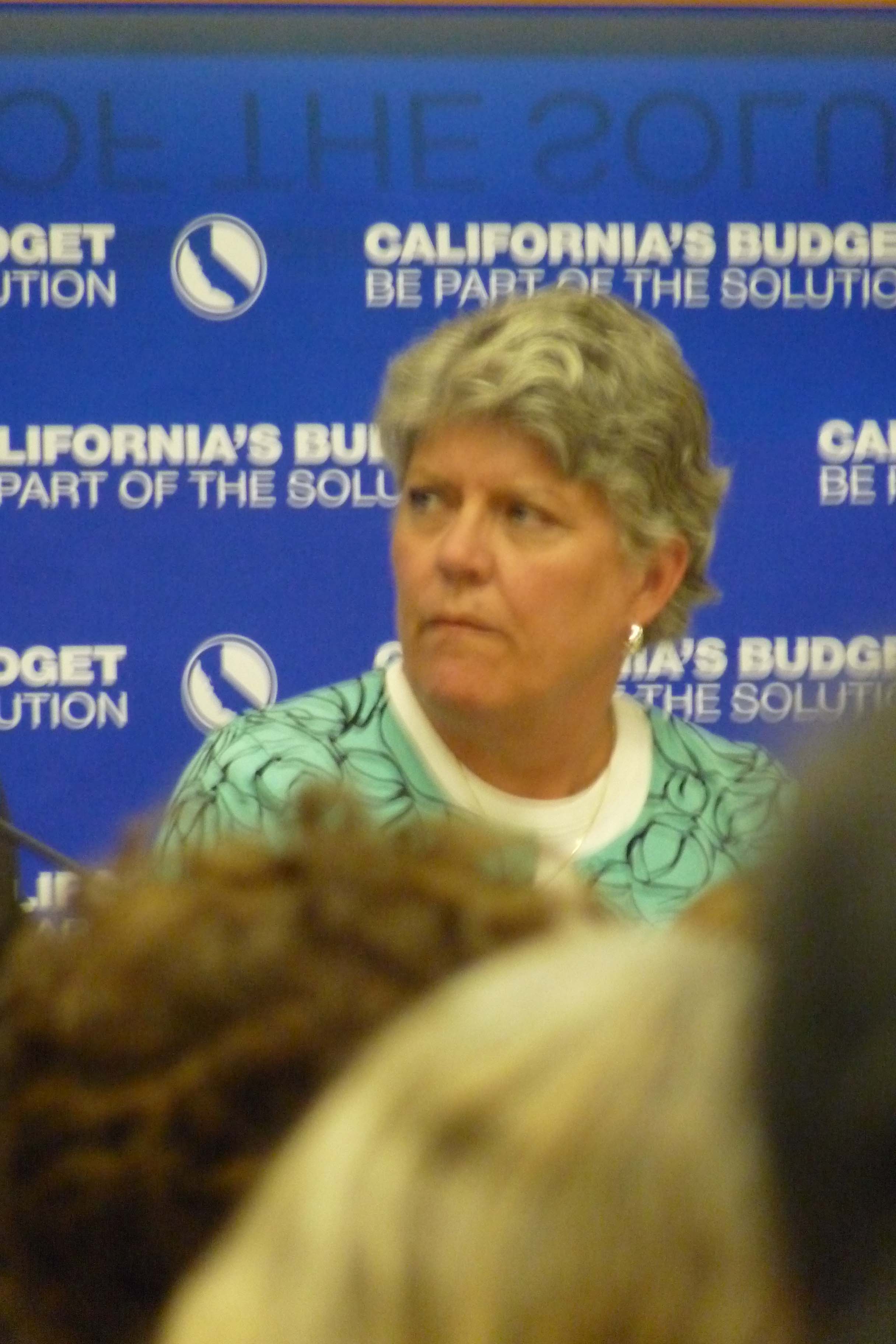
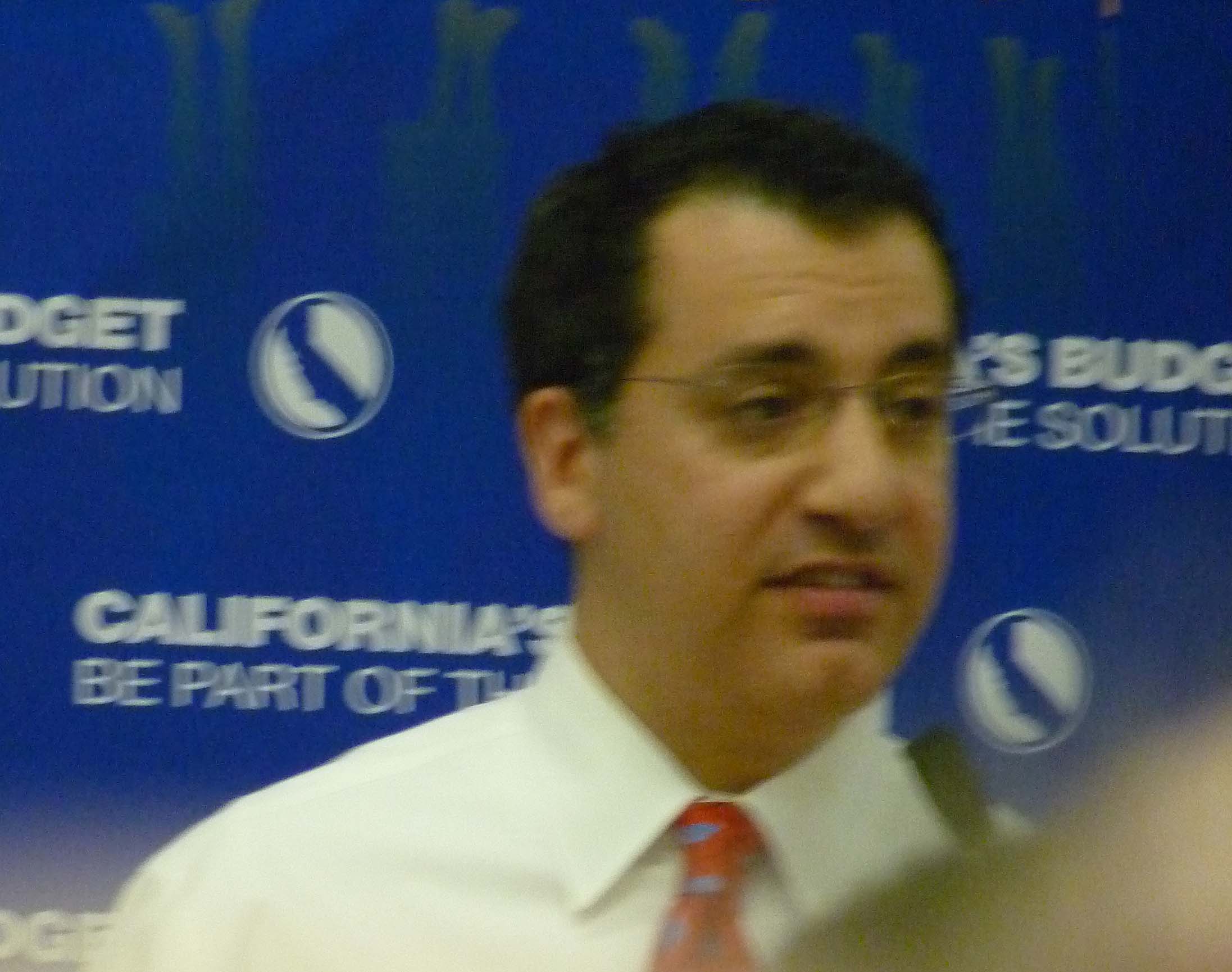
Bob Blumenfield is the Assemblyman representing my California district in Sacramento.  Mr. Blumenfield represents a large portion of the west and north communities of the San Fernando Valley.  As chair of the Assembly Budget Committee he has taken his “California Budget: Be part of the Solution” program on the road.  He held a “Community Forum on State Budget Priorities” at a major senior center in the center of the Valley.

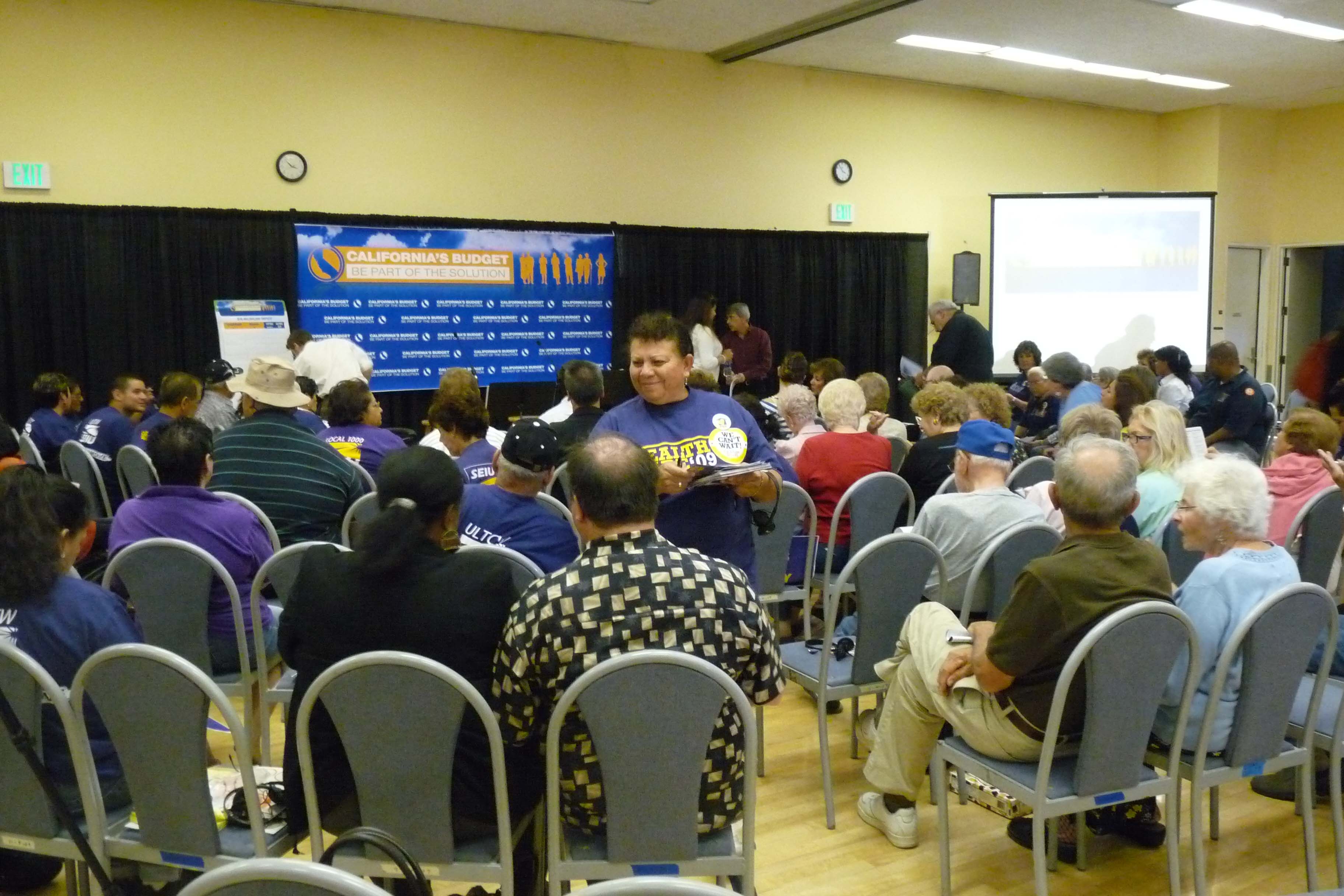
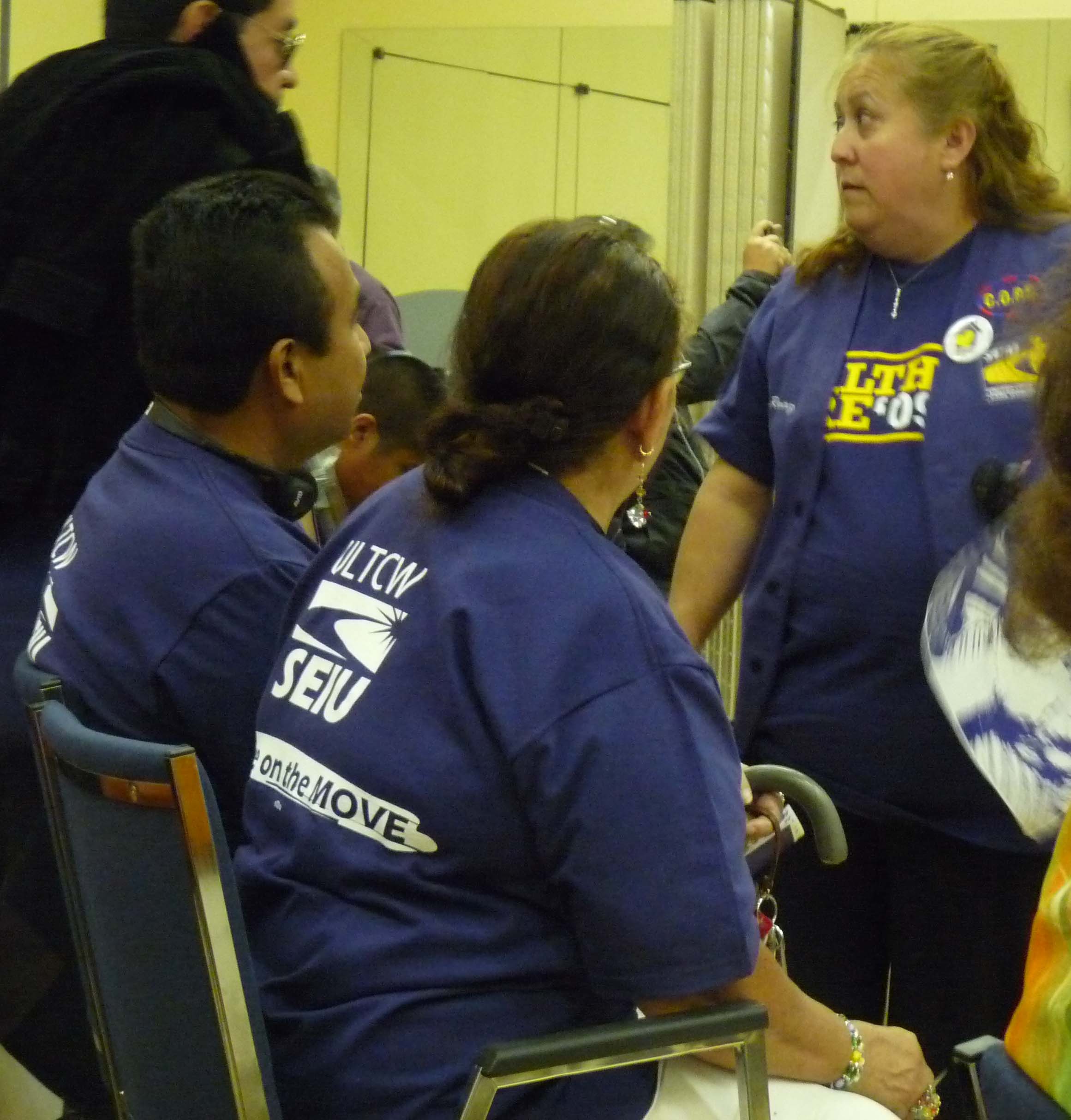
To my surprise the auditorium was filled with members of the SEIU.  Most were wearing T shirts to advertise that fact.  What had I walked into?  The lady sitting next to me works downtown for the DMV.  Although the senior center had publicized this event, there were no more than 10% seniors (based upon appearance).  600 people were expected to attend.  There were at least 400 there.

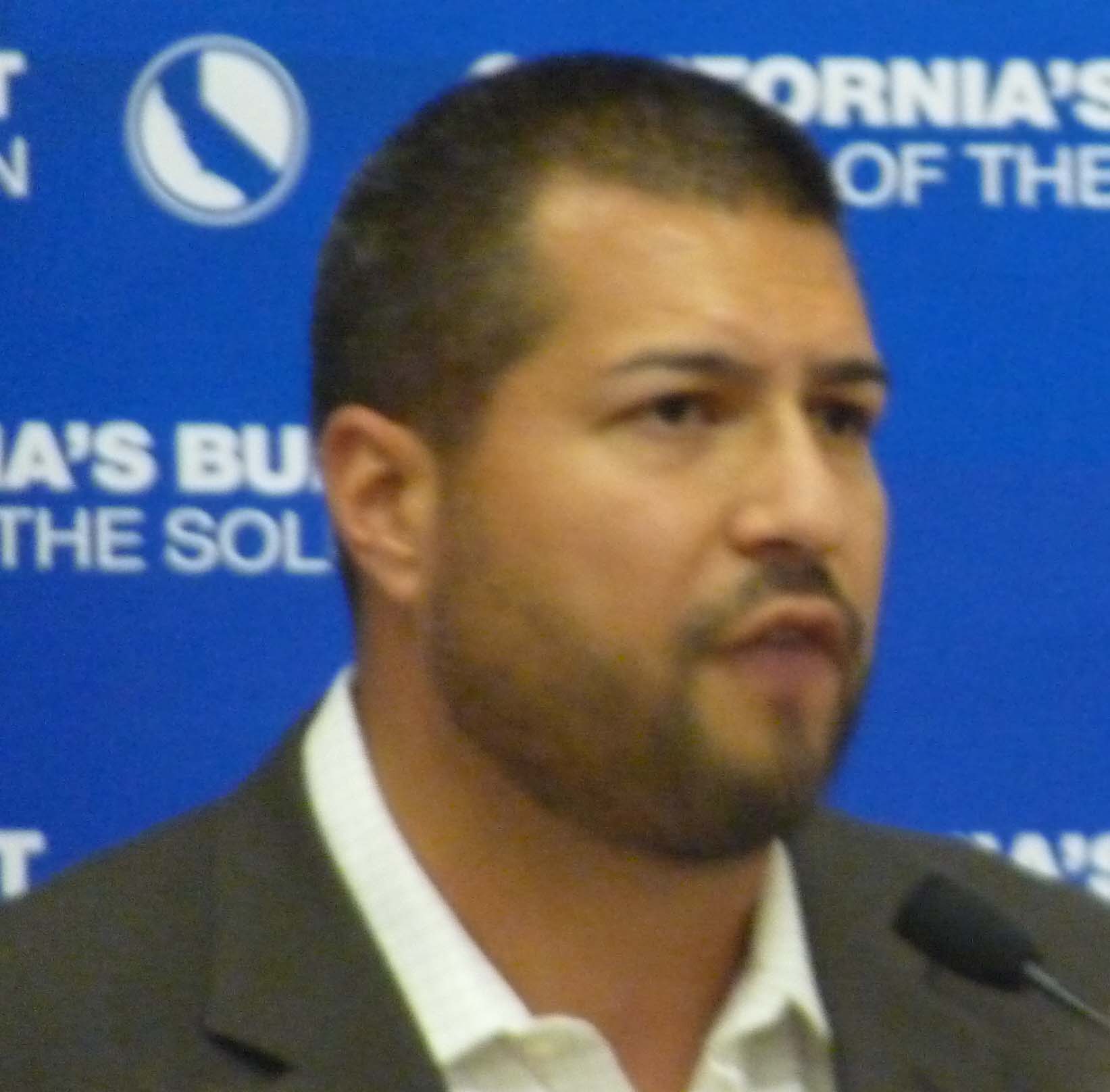
In addition to Mr. Blumenfield the other assembly members included in the panel were Fiona Ma (D-San Francisco), Julia Brownley, 41st Assembly (D-Portions of the San Fernando Valley and adjoining areas), and Felipe Fuentes – Chairman of the Appropriations Committee (D-North East San Fernando Valley).  Ms. Ma’s photo is from her web site.  The other three photo were taken by me.


Questions were asked and audience participation provided answers using wireless communicators regarding services to be provided and ways to raise money to pay for those desired services.  There was never any discussion about the fact that the budget is already projected to have a short fall of $24.3 Billion.  There was never any discussion of the high cost of pensions or services provided to illegal aliens.

Mr. Blumenfield is a hard worker at spreading his face and name as demonstrated by the photo album on his assembly web site.  Based on my attempt to ask questions after the meeting, he is not willing to discuss the real budget issues.  He answered my questions with evasion.

How to Defeat Democracy

2/3 Requirement Makes a Mockery of Majority Rules

The words of Thomas Jefferson: “The only way a republican government can function, and the only way a people’s voice can be expressed to affect a practicable control of government, is through a process in which decisions are made by the majority. This is not a perfect way of controlling government, but the alternatives–decisions made by a minority, or by one person–are even worse and are the source of great evil. To be just, majority decisions must be in the best interest of all the people, not just one faction.”

Despite repeated similar statements by Jefferson and other great American leaders we have continuing efforts to abridge the process by asking voters and assemblies to approve laws that require 67% or two thirds (2/3) vote to pass laws.  Proposition 16 on the June 2010 California ballot is another example of that kind of law.  Californians has voted that restriction into law repeatedly. The result is that one third of the population (or assembly) determines if the state will pass a budget or if a school district can sell bonds.  Or in other words the 2/3 vote Pacific Gas and Electric is proposing means that if  the Proposition is passed that it will then take a 2/3 majority to enable any municipality to create a publicly owned utility.

The U.S. Senate requirement of 60% to pass laws is equally abhorrent.

Wall Street Won’t Change

The set of characters who are publicly promoting or opposing bank reform are not really interested in any financial reforms no matter what they say.  The reason is simple.  There is a significant amount of money to be made keeping things exactly the way they are today.  All of these participants have developed perfect “poker faces.”  None become emotional even when they are caught in a lie or when defending their carefully determined strategy.

Senators Thomas Dodd (D) and Richard Shelby (R) were on last week’s Meet the Press.  Both acting very professional and directing there responses to host David Gregory, neither confronted the other even though it was apparent from their words that they have significant disagreements on what financial reform should look like.  Dodd is not running for re-election because of one major reason.  He has taken contributions from Wall Street and was the beneficiary of a specially designed loan from Country Wide Mortgage.  The progressive issue-advocacy group Americans United for Change (AUC) reports Shelby had received $5.3 million in contributions from the financial industry since 1998.  Of course both men deny these allegations.

Henry Paulson, Secretary of the Treasury in the Bush administration is a former CEO of Goldman Sachs.  He saw that his ex employer was protected but Lehman Brothers, a Goldman Sachs competitor, was allowed to go bankrupt.  Coincidence?  Not likely!

Alan Greenspan, the most famous chairman of the Federal Reserve, previously served as a corporate director for Aluminum Company of America (Alcoa); Automatic Data Processing, Inc.; Capital Cities/ABC, Inc.; General Foods, Inc.; J.P. Morgan & Co., Inc.; Morgan Guaranty Trust Company of New York; Mobil Corporation; and The Pittston Company.  He was appointed to that most important job by President Ronald Reagan.  In mid-January 2008, hedge fund Paulson & Co. hired Greenspan as an adviser on economic issues and monetary policy.  Paulson & Co. is the company that has been implicated in the Goldman Sachs case of allegations related to bets against mortgage derivatives which earned the firm billions of dollars last year and is now front page news.

John Paulson (founder and head of Paulson & Co.), age 54, a Harvard MBA whose personal wealth is estimated at $12 billion by Forbes magazine, is at the heart of the government’s fraud case against Goldman, Sachs & Co.  Newsweek magazine describes how he went from obscurity to “place alongside George Soros and Warren Buffett as an oracle of investing.”    

Ben Bernanke appears to be one of the few in government that has not been tainted by Wall Street.  However, his behavior is unchanged from that of Alan Greenspan.  Perhaps he has been infected too.

If you believe this cast of players will change their ways or the way Wall Street functions then you are in a dream world.

The president wins on the appearance front.  Nothing will really change.