I respect New York Times commentator David Brooks for his well thought out columns. His appearances on Sunday talk shows always provide calm clear analysis. This is what he said about the 2008 economic meltdown.
It all started with Fannie Mae, the government-backed mortgage giant, and its former chief executive James Johnson. In a well reported new book, Reckless Endangerment, Gretchen Morgenson and Joshua Rosner reveal how Johnson, a “Democratic sage with a raft of prestigious connections,” enriched his friends and made $100 million for himself by flooding the market with risky subprime mortgages. Dispensing with the usual criteria for making loans, Fannie handed out billions in federally guaranteed dollars like candy, and “helped spread risky behavior and low standards across the housing industry.” Johnson and his cronies paid themselves lavishly, and used Fannie funding to lobby congressmen, falsify academic research, and suck in “reputable figures” such as Bill Daley, Ken Starr, and Larry Summers to defend Fannie’s scam. In the end it all crashed-bringing big banks, Wall Street, and the entire economy down with it. Yet Johnson and the other power players skated away, blameless. “This is how Washington works.” Is it any wonder there’s such a growth market for angry populism?
The Associated Press had an article posted yesterday titled “Aging America.” It brought up this continuously nagging question about retiring to another city or perhaps another city in another country that would be a better match than the place where you are now living. “Cities and suburbs were designed for younger people, full of stairs and cars, he explained. As they become increasingly difficult to navigate, older people gradually retreat.”
Let’s face it. Getting old is no fun. Besides the greater need for medical care we have grown accustomed to living the way we have lived most of our lives. For most of us familiarity with our surroundings is an important issue.
A real estate web site published this statement at the top of the topic: For seniors, family is the biggest reason to move
When Americans age 55 and older decide to relocate, most often it’s to be closer to family and friends.
Despite the knowledge that my own parents had difficulties re-locating to a retirement community I still feel the need to repeatedly re-confirm my decision to stay in the same home I have had for over 30 years.
Senior Journal offered the following information about the best places to live
For countries, International Living rates France #1 followed by Australia, Switzerland, Germany, New Zealand, Luxembourg and finally the US. Canada came in ninth place. Each January, they rank and rate 194 countries to come up with the list of the places that offer you the best quality of life. It isn’t about best value, necessarily. It’s about the places in the world where the living is, simply put, great. On this site you can subscribe to their free daily e-letter about the best places to consider retirement. I did and almost instantly, here is what they sent back: “There are still numerous countries around the world where unspoiled natural beauty, secluded beaches, friendly people, and a relaxed way of life are waiting for you. And you don’t have to spend a fortune to enjoy them. In sunny, relaxed destinations all around the world, you’ll find your dollars stretching much further than you might imagine.”
The Economist Intelligence Unit’s livability surveyreport said Vancouver, and Melbourne, “with low crime, little threat from instability or terrorism and a highly developed infrastructure,” are the two most livable cities in the world, having tied for first place. Australia’s other major cities (Brisbane, Sydney, Adelaide and Perth) all claimed positions well inside the top ten – strengthening the idea that Australia is one of the most livable countries in the world. Other Canadian cities also ranked highly in the survey, which further suggests that this is the same of Canada. Toronto, Montreal, Calgary, Ottawa and the aforementioned Vancouver all ranked within the top 25.
Following is a list of the top 10 most livable cities as ranked by The Economist: 1. Vancouver, Canada 2. Vienna, Austria 3. Melbourne, Australia 4. Toronto, Canada 5. Calgary, Canada 6. Helsinki, Finland 7. Sydney, Australia 8. Perth, Australia 9. Adelaide, Australia 10. Auckland, New Zealand. Looks like a good idea to “consider down under” for a great place to retire, doesn’t it?
A Bankers Life and Casualty sponsored study on the best place to live, conducted in 2005 is still being quoted as one of the best resources.
A panel of experts on gerontology and senior issues identified the qualities for optimal senior living. Major categories were: health, disease, economics, social, environment, spiritual, transportation, housing, and crime. Each category was statistically weighted to reflect the needs of the senior population.
Categories evaluated
The Health category included criteria such as physician to senior ratio, gerontologist to senior ratio, hospitals per capita, and availability of adult day care, assisted living facilities, continuing care (CCRC) facilities, independent living facilities, nursing homes, and senior meals.
Housing included cost of living, median home price, property taxes and monthly apartment rent.
Transportation included public transportation, special access transportation, and commuting times.
Social included the percentage of seniors, entertainment, the arts, museums, education, recreation, colleges, and libraries.
Crime included violent crime and property crime.
Environment included sunny days, clean air, clean water, natural disaster risk, ocean coastline, rivers and lakes, and national parks.
Economy included consumer prices, sales taxes, unemployment rate, and recent job growth.
Disease included life expectancy, age 85 expectancy, depression rate, heart disease, and cancer rates.
Spiritual included percent of population belonging to organized religions and the number of religious congregations.
Bankers’ Best Cities for Seniors 2005 American Financial Resources is offering the same list in 2011.
1. Portland, Ore.
2. Seattle , Wash.
3. San Francisco , Cal.
4. Pittsburgh, Penn
5. Milwaukee , Wis.
6. Philadelphia , Penn.
7. New York , N.Y.
8. Boston , Mass.
9. Cincinnati , Ohio
10. Chicago , Ill.
17. Los Angeles , Cal.
34. San Diego, Cal.
35. Phoenix, Az.
41. Las Vegas, Nev.
42. Fort Lauderdale, Fla.
47. Orange County, Cal.
This is an interesting list considering that Scottsdale, Arizona and Mesa, Arizona (two suburbs of Phoenix) have very large senior populations as do many communities throughout Florida. My parents lived in Laguna Woods, CA (formerly known as Leisure World) where the senior population is 18,000 people and has drawn many other seniors into adjoining communities.
Despite the desire of the National Home Builders to promote moving to retirement communities their own study found the following data: • The majority of 55 and older households do not live in age-restrictive or age-qualified communities, but the number is going up. In 2007, 3% of those 55 and older said they lived in age-restricted communities designed for active adults; that’s up from 2.2% in 2001.
• Most consumers of this age were happy with their current homes, but residents of age-restricted active-adult communities had the highest satisfaction rates.
• Of baby boomers close to 65 years old, the traditional retirement age, many say they aren’t planning on retiring just yet. If they move, they want to end up in a community that would be closer to work or one that would allow them to transition into a work-from-home setup.
Toronto, Vancouver, and Boston were all interesting to visit and we might return for fun and entertainment but we seem to be happy with the San Fernando Valley. Maybe it was the song!
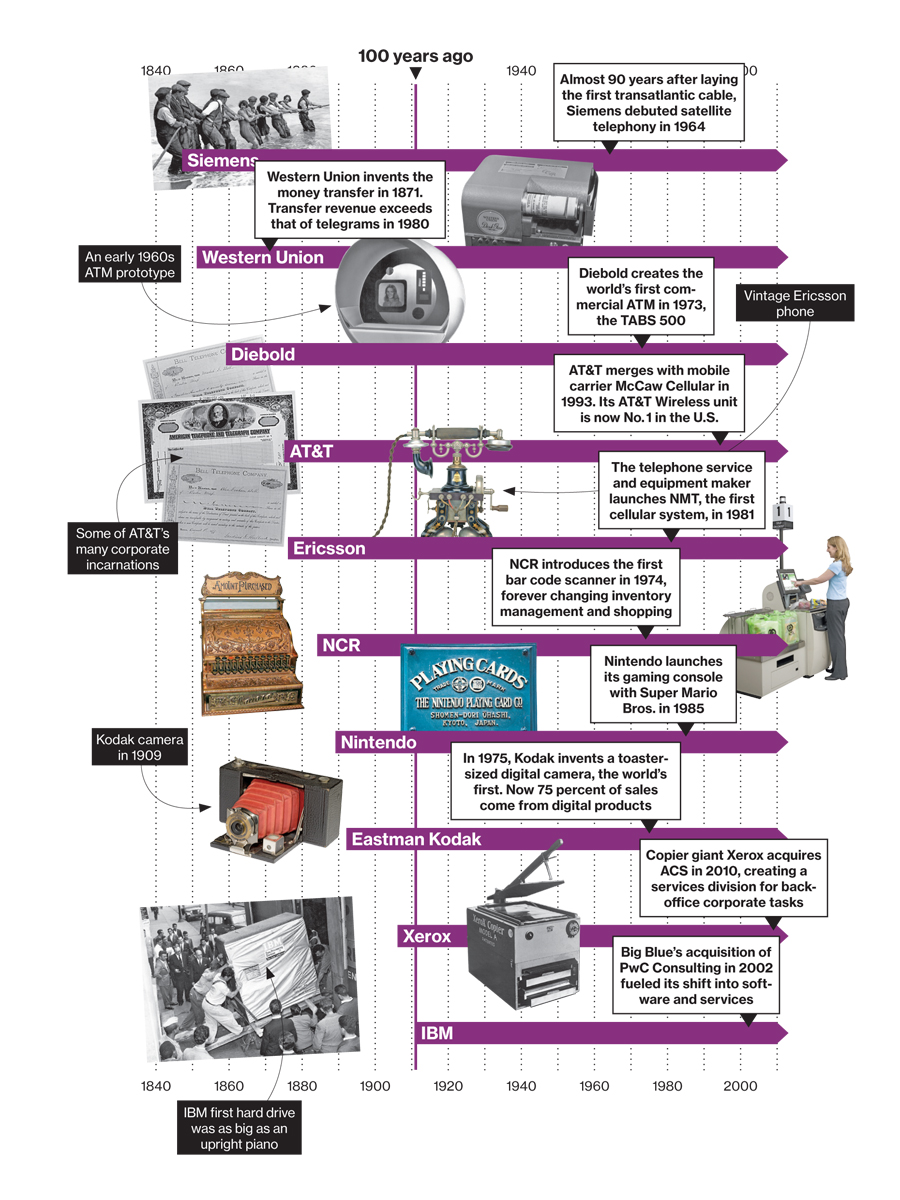
The following graph appeared in Businessweek magazine in the July 4, 2011 edition. This is a depiction of 100 years of some of the world’s greatest innovations. Notice that most of them were created in the United States. None of these noteworthy achievements came from Silicon Valley.
The summer before enrolling at my local community college, I spent my nights stuffing flyers into newspapers until my fingers bled.
I already had another part-time job, working 25 hours each week at a local music store for minimum wage ($8 per hour). But I knew I had to take on another job in order to help pay for my upcoming tuition. When I saw the newspaper warehouse job advertised in the local paper for an entire dollar above minimum wage, I jumped at the chance.
For three months I worked on call from 11 p.m. to 7:00 a.m. I wouldn’t know if they needed me to work until at least 8:00 p.m. the evening of the shift.
The work was hard and tedious. I stood in a freezing cold warehouse stuffing flyers into newspapers, and then bundling those newspapers into stacks of 25 to go out for delivery. My fingers started to bleed after the first week on the job, and my hands were too small to wear the plastic gloves provided to us.
Bouncing from working days at my music store job, then nights at the newspaper warehouse seemed like a good idea at the time. But after a few back-to-back shifts, I quickly realized that the $1 per hour extra instead of sleeping wasn’t worth it. I was having a hard time staying awake during shifts at my other job, and my social life was non-existent because I was always exhausted.
My experience as a night shift newspaper bundler might have been different had there been co-workers I could relate to. But most of the employees kept to themselves or didn’t speak English, so I kept my mouth shut for each eight hour shift.
Now, nearly 10 years later, every time I have an awful day at work, or encounter a freelancing client that drives me crazy, I think back to my time as a newspaper bundler, and all of a sudden my day doesn’t seem so bad anymore.
What was the worst job you’ve ever had?
Written by Krystal Yee and posted in the Toronto Star. FYI income and pay in Canadian dollars is almost exactly the same as in the U.S.A.
Krystal Yee is a marketing and graphic design professional living in Vancouver. She also blogs at Give Me Back My Five Bucks. You can reach her on Twitter (@krystalatwork), or by e-mail at krystalatwork@gmail.com.
Smug Californians thought they were so smart when they passed Proposition 13 (officially named the People’s Initiative to Limit Property Taxation) by 65%. The law set the initial property tax at 1.25% of the purchase price and restricts annual increases of assessed value of real property to an inflation factor, not to exceed 2% per year. I was one of those who voted for the law.
“We’ve chosen mediocre public service, and more private money. We’ve decided not to tax ourselves as much. We’ve basically turned our back on schools. It’s a choice we made within our state.” John Mockler, First to Worst
We were warned that there would be a price to pay for the imposition of the regulaton but we ignored the politicians.
This year many of us supported the anticipated 1% reduction in sales tax and a reduction in auto licensing fees.
Now we have to face the consequences of our choices. State parks are being closed, the highways are falling apart, and the schools lack funds to employ all the needed teachers. The final blow is our famed higher education system is now too expensive for the middle class. Even community college are asking students to pay $26.00 per unit in Los Angeles.
I earned by four year college degree by attending a junior college for two years at a cost of $6.50 per semester and two years at a state university at $42 a semester. The books cost more than the enrollment fees. I graduated in 1962.
In 1960, UCLA tuition fees were practically non-existent. However, by 1985 they had reached $722. Today University of California 2011-12, systemwide tuition and fees for California residents will be $11,124.
All students enrolling at California State University pay the systemwide State University Fee which is currently $4230 per academic year for undergraduate students enrolling in more than 6 units per term.
The consequence of our selfish decision to control property taxes is the 11.9% unemployment rate, the growing number of poorly educated citizens that lack the skills to compete in a more technologically demanding society, the deteriorating highway system, the closing of state parks, etc.
By the way California is not alone. Massachusetts, Oregon, Colorado and Florida all went on to copy key provisions of the Proposition 13, while voters in 18 other states passed nearly 40 statewide tax-limiting measures.
It should come as no surprise that Programme for International Student Assessment (PISA) report, which compares the knowledge and skills of 15-year-olds in 70 countries around the world, ranked the United States 14th out of 34 Organisation for Economic Co-operation and Development (OECD) countries for reading skills, 17th for science and a below-average 25th for mathematics.
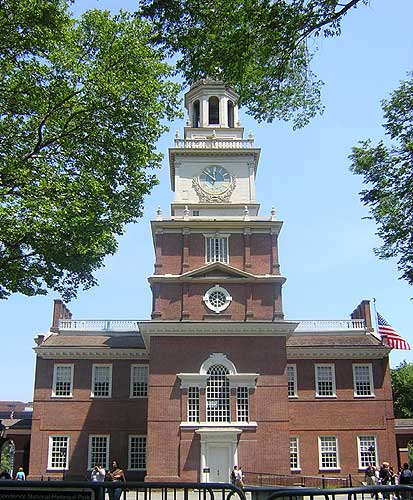
On July 4, 1776, the Second Continental Congress, meeting in Philadelphia in the Pennsylvania State House (now Independence Hall), approved the Declaration of Independence, severing the colonies’ ties to the British Crown.
IN CONGRESS, JULY 4, 1776
The unanimous Declarationof the thirteen unitedStates of America
hen in the Course of human events it becomes necessary for one people to dissolve the political bands which have connected them with another and to assume among the powers of the earth, the separate and equal station to which the Laws of Nature and of Nature’s God entitle them, a decent respect to the opinions of mankind requires that they should declare the causes which impel them to the separation.
We hold these truths to be self-evident, that all men are created equal, that they are endowed by their Creator with certain unalienable Rights, that among these are Life, Liberty and the pursuit of Happiness. — That to secure these rights, Governments are instituted among Men, deriving their just powers from the consent of the governed, — That whenever any Form of Government becomes destructive of these ends, it is the Right of the People to alter or to abolish it, and to institute new Government, laying its foundation on such principles and organizing its powers in such form, as to them shall seem most likely to effect their Safety and Happiness. Prudence, indeed, will dictate that Governments long established should not be changed for light and transient causes; and accordingly all experience hath shewn that mankind are more disposed to suffer, while evils are sufferable than to right themselves by abolishing the forms to which they are accustomed. But when a long train of abuses and usurpations, pursuing invariably the same Object evinces a design to reduce them under absolute Despotism, it is their right, it is their duty, to throw off such Government, and to provide new Guards for their future security. — Such has been the patient sufferance of these Colonies; and such is now the necessity which constrains them to alter their former Systems of Government. The history of the present King of Great Britain is a history of repeated injuries and usurpations, all having in direct object the establishment of an absolute Tyranny over these States. To prove this, let Facts be submitted to a candid world.
He has refused his Assent to Laws, the most wholesome and necessary for the public good.
He has forbidden his Governors to pass Laws of immediate and pressing importance, unless suspended in their operation till his Assent should be obtained; and when so suspended, he has utterly neglected to attend to them.
He has refused to pass other Laws for the accommodation of large districts of people, unless those people would relinquish the right of Representation in the Legislature, a right inestimable to them and formidable to tyrants only.
He has called together legislative bodies at places unusual, uncomfortable, and distant from the depository of their Public Records, for the sole purpose of fatiguing them into compliance with his measures.
He has dissolved Representative Houses repeatedly, for opposing with manly firmness his invasions on the rights of the people.
He has refused for a long time, after such dissolutions, to cause others to be elected, whereby the Legislative Powers, incapable of Annihilation, have returned to the People at large for their exercise; the State remaining in the mean time exposed to all the dangers of invasion from without, and convulsions within.
He has endeavoured to prevent the population of these States; for that purpose obstructing the Laws for Naturalization of Foreigners; refusing to pass others to encourage their migrations hither, and raising the conditions of new Appropriations of Lands.
He has obstructed the Administration of Justice by refusing his Assent to Laws for establishing Judiciary Powers.
He has made Judges dependent on his Will alone for the tenure of their offices, and the amount and payment of their salaries.
He has erected a multitude of New Offices, and sent hither swarms of Officers to harass our people and eat out their substance.
He has kept among us, in times of peace, Standing Armies without the Consent of our legislatures.
He has affected to render the Military independent of and superior to the Civil Power.
He has combined with others to subject us to a jurisdiction foreign to our constitution, and unacknowledged by our laws; giving his Assent to their Acts of pretended Legislation:
For quartering large bodies of armed troops among us:
For protecting them, by a mock Trial from punishment for any Murders which they should commit on the Inhabitants of these States:
For cutting off our Trade with all parts of the world:
For imposing Taxes on us without our Consent:
For depriving us in many cases, of the benefit of Trial by Jury:
For transporting us beyond Seas to be tried for pretended offences:
For abolishing the free System of English Laws in a neighbouring Province, establishing therein an Arbitrary government, and enlarging its Boundaries so as to render it at once an example and fit instrument for introducing the same absolute rule into these Colonies
For taking away our Charters, abolishing our most valuable Laws and altering fundamentally the Forms of our Governments:
For suspending our own Legislatures, and declaring themselves invested with power to legislate for us in all cases whatsoever.
He has abdicated Government here, by declaring us out of his Protection and waging War against us.
He has plundered our seas, ravaged our coasts, burnt our towns, and destroyed the lives of our people.
He is at this time transporting large Armies of foreign Mercenaries to compleat the works of death, desolation, and tyranny, already begun with circumstances of Cruelty & Perfidy scarcely paralleled in the most barbarous ages, and totally unworthy the Head of a civilized nation.
He has constrained our fellow Citizens taken Captive on the high Seas to bear Arms against their Country, to become the executioners of their friends and Brethren, or to fall themselves by their Hands.
He has excited domestic insurrections amongst us, and has endeavoured to bring on the inhabitants of our frontiers, the merciless Indian Savages whose known rule of warfare, is an undistinguished destruction of all ages, sexes and conditions.
In every stage of these Oppressions We have Petitioned for Redress in the most humble terms: Our repeated Petitions have been answered only by repeated injury. A Prince, whose character is thus marked by every act which may define a Tyrant, is unfit to be the ruler of a free people.
Nor have We been wanting in attentions to our British brethren. We have warned them from time to time of attempts by their legislature to extend an unwarrantable jurisdiction over us. We have reminded them of the circumstances of our emigration and settlement here. We have appealed to their native justice and magnanimity, and we have conjured them by the ties of our common kindred to disavow these usurpations, which would inevitably interrupt our connections and correspondence. They too have been deaf to the voice of justice and of consanguinity. We must, therefore, acquiesce in the necessity, which denounces our Separation, and hold them, as we hold the rest of mankind, Enemies in War, in Peace Friends.
We, therefore, the Representatives of the united States of America, in General Congress, Assembled, appealing to the Supreme Judge of the world for the rectitude of our intentions, do, in the Name, and by Authority of the good People of these Colonies, solemnly publish and declare, That these united Colonies are, and of Right ought to be Free and Independent States, that they are Absolved from all Allegiance to the British Crown, and that all political connection between them and the State of Great Britain, is and ought to be totally dissolved; and that as Free and Independent States, they have full Power to levy War, conclude Peace, contract Alliances, establish Commerce, and to do all other Acts and Things which Independent States may of right do. — And for the support of this Declaration, with a firm reliance on the protection of Divine Providence, we mutually pledge to each other our Lives, our Fortunes, and our sacred Honor.
Michigan Representative Thaddeus McCotter is running for president. His website lists five core principles of his candidacy, including the notions that:
—Our liberty is from God not the government
—Our sovereignty is in our souls not the soul
—Our security is from strength not surrender
—Our prosperity is from the private sector not the public sector
—Our truths are self-evident not relative
I might agree with some of these thoughts but I want to hear his explanation.
What does ‘Seize Freedom!’ mean? Thaddeus McCotter has some ‘splainin’ to do.
ABC World News reported just this past week that 98% of all clothes in the United States are imports.
It was reported in the Los Angeles Times on June 30, 2011 that the White House is pushing for free trade agreements with South Korea, Columbia, and Panama. At the same time they are concerned about the loss of American jobs. The concern is about “the 46 year old male, the family breadwinner, with a high school education who had worked more than a decade in a factory that is closing.”
This is astonishing. The Democratic Party, they are the party that claims to be concerned about America’s middle class and poor, is pushing for these treaties to be passed. The GOP opposes the treaties because of a requirement that training for those losing their jobs is included in the laws. They too seem to favor exporting more jobs.
How many jobs have we lost to free trade? The Economic Policy Institute estimates more than 500,000 job have been lost in the United States to Mexico. US Bureau of Statistics lists imports from Mexico have increased from $134 billion on 2002 to $229 billion in 2010. Exports in the same period increased from $97 billion to $163 billion.
This Businessweek item in the June 20, 2011 edition asks a question we should all ask. How much government interference in business is too much?
The Dodd-Frank financial reform law requires the Federal Reserve to set a limit on how much banks may charge for processing debit-card transactions. The average fee now is 44¢ per transaction. The Fed has proposed a limit of 12¢ beginning July 21.
The banks, naturally, don’t care for this. These transaction fees bring them about $20 billion a year. So they have been conducting one of those ludicrous lobbying campaigns that sweep over Washington from time to time, warning of higher prices, reduced services, plagues of locusts, more naked congressmen on Twitter, and just about any deplorable development you can think of if the new regulations are allowed to go through. On June 8 the Senate defeated a proposal to delay the limit for six months to allow time for further study.
The banks’ campaign against the price cap is so elaborate, expensive, and sometimes disingenuous that it is natural to assume they must be in the wrong. They’ve spent millions on lobbying. Organizations with preposterous names such as Americans for Prosperity (who isn’t?) gin up letter-writing campaigns, and consultants stage other “grass-roots” activities to give the impression that citizens are deeply concerned about this issue-which they aren’t.
Shenanigans aside, the big banks are in the right. Why should the government set the price for using a debit card? Most prices in our economy are set by the market-an arrangement that’s worked pretty well over the past couple of centuries. If 44¢ is more than this service really costs, surely one of America’s thousands of banks will take a deep breath and offer to do it for 42¢.
If Visa and MasterCard have enough market power to prevent that from happening, the answer is antitrust, not pricecontrols. It’s too bad that America’s banks don’t have enough confidence in free markets to make an honest argument on their own behalf.
–
It was announced today that the final decision by the Federal Reserve is a 21¢ fee. Interestingly both Visa and Master Card stocks went up after a hold on trading.

 I respect New York Times commentator David Brooks for his well thought out columns. His appearances on Sunday talk shows always provide calm clear analysis. This is what he said about the 2008 economic meltdown.